
 Medically ReviewedDr. Vijaykumar MalladiLaparoscopic & Robotic Surgeon Medically ReviewedDr. Vijaykumar Malladi
Consult Dr. Vijaykumar Malladi, Laparoscopic & Robotic Surgeon at MITR Hospital, Kharghar, Navi Mumbai, for general, gastrointestinal and hernia surgery.
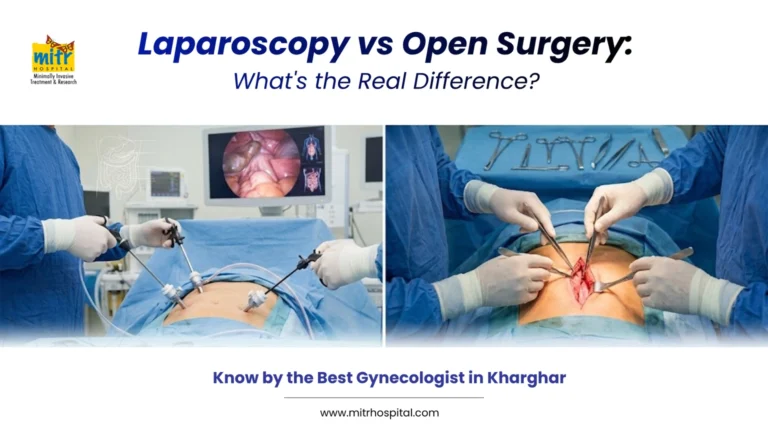
View doctor profile →If you need hernia surgery, your surgeon will likely discuss two primary options: laparoscopic hernia surgery or open surgery. While both effectively repair the defect, the patient experience varies significantly, from the size of the incisions to your overall recovery time.
So, what really sets these two approaches apart, and why might a surgeon recommend one over the other?
Here’s your detailed guide.
Table of Contents
- Key Takeaways
- What is a hernia?
- Why is it necessary to repair a hernia?
- How Does Open Hernia Surgery Work?
- How Does Laparoscopic Hernia Surgery Work?
- When Is Laparoscopic Hernia Surgery Considered?
- When is open hernia surgery preferred?
- Recovery After Hernia Surgery
- Laparoscopic vs Open Hernia Surgery: A Quick Comparison
- Can a Hernia Be Managed Without Surgery?
- Red Flags: Emergency Care
- Complications: Open vs. Laparoscopic Surgery
- Making the Right Choice
- FAQs on Laparoscopic and Open Hernia Surgery
Key Takeaways
- Both laparoscopic and open surgery are established approaches to hernia repair.
- Laparoscopic repair uses smaller incisions and may allow a faster recovery in suitable patients.
- Open repair can be appropriate for larger, complex or recurrent hernias and for patients who may not be suitable for general anesthesia.
- The choice of procedure should be based on individual patient and hernia-related factors.
- Neither approach is automatically better for every patient.
What is a hernia?
A hernia develops when an internal organ or tissue pushes through a weak spot in the surrounding muscle. They most commonly occur in the abdomen or groin, appearing as a visible lump that causes a dull ache or sharp pain when coughing, lifting, or standing (the early signs of a hernia). Some hernias present no visible bulge and are only found during a medical exam.
- Abdominal Wall Hernias: Form in the front of the abdomen. Common types include umbilical (at the belly button), epigastric (above the navel), and incisional hernias (at a past surgical scar).
- Groin Hernias: Form near the leg crease. These include inguinal hernias (most common, in the inguinal canal) and femoral hernias (lower in the inner aspect of upper part of thigh, more common in women).
Why is it necessary to repair a hernia?
A hernia is a physical gap or weakness in your muscle wall. Because this is a structural defect, it cannot heal on its own and will typically grow larger over time. Surgery is the only definitive treatment.
Your medical team recommends repairing the hernia to achieve the following:
- Prevent Complications (Strangulation): If tissue or a loop of intestine becomes trapped in the muscle gap, it is considered incarcerated. If the blood supply to this trapped tissue gets cut off, it becomes strangulated. This is a life-threatening emergency that requires immediate surgery.
- Relieve Daily Discomfort: Surgery eliminates the aching, pressure, burning, or sharp pain you may feel when bending, coughing, standing, or lifting.
- Stop the Hernia from Growing: Internal pressure naturally pushes tissue outward, stretching the muscle gap over time. Repairing it early prevents the hernia from becoming larger and more complex to fix.
- Restore Your Active Lifestyle: Closing the defect removes the bulge, allowing you to return to work, exercise, and normal activities safely.
How Does Open Hernia Surgery Work?
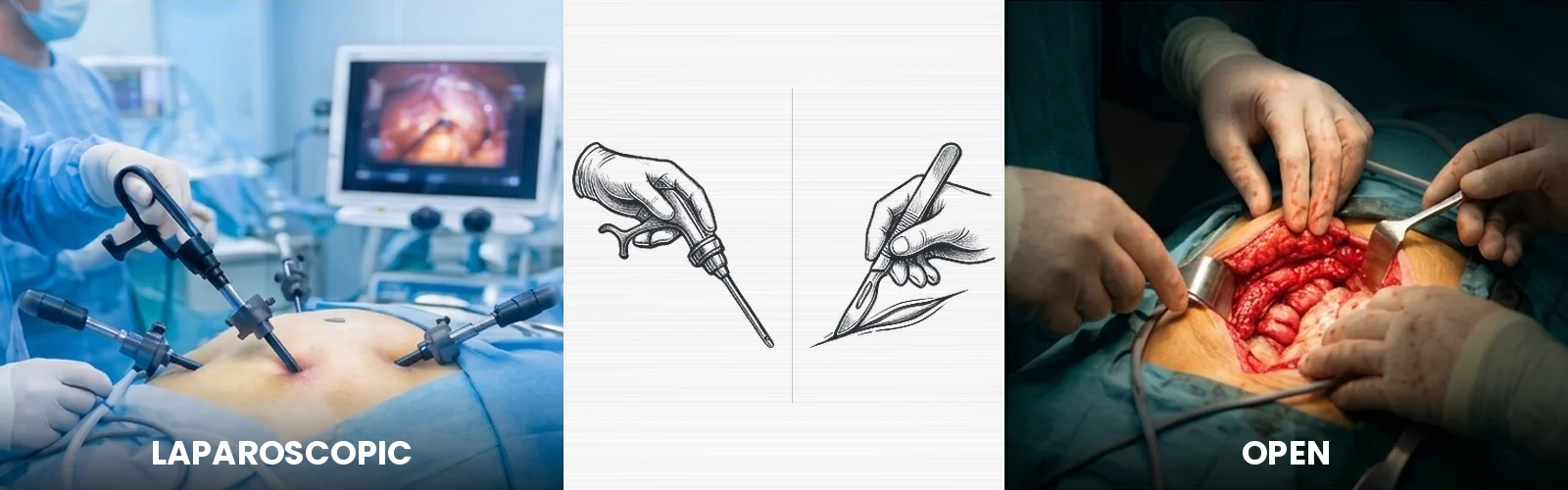
In open hernia repair, the surgeon makes an incision over the affected area to access the hernia directly. The protruding tissue is returned to its appropriate position, and the weakened abdominal wall is repaired. A surgical mesh may be used to reinforce the area and reduce the likelihood of recurrence.
One advantage of open surgery is that it can be performed using different types of anesthesia in appropriate patients, including local, spinal or general anesthesia. This can make it an option for people who may not be suitable for general anesthesia required for laparoscopic surgery.
However, the larger incision may result in more discomfort and a more noticeable scar. Recovery can also take longer, particularly before returning to strenuous physical activities.
How Does Laparoscopic Hernia Surgery Work?
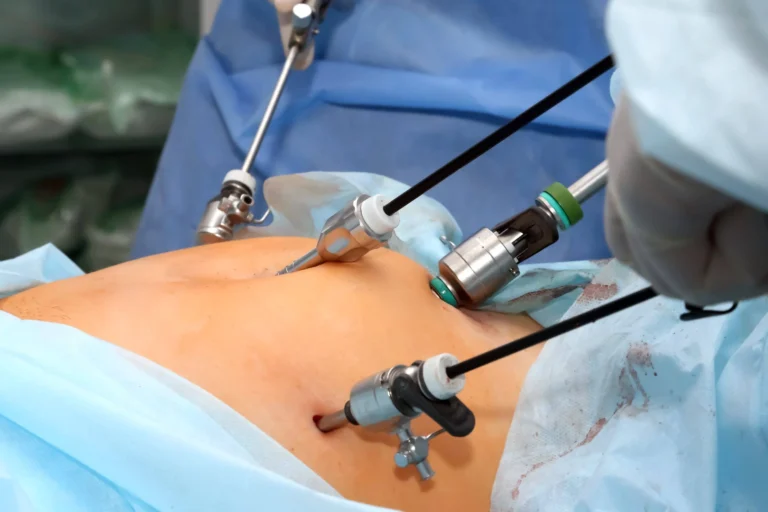
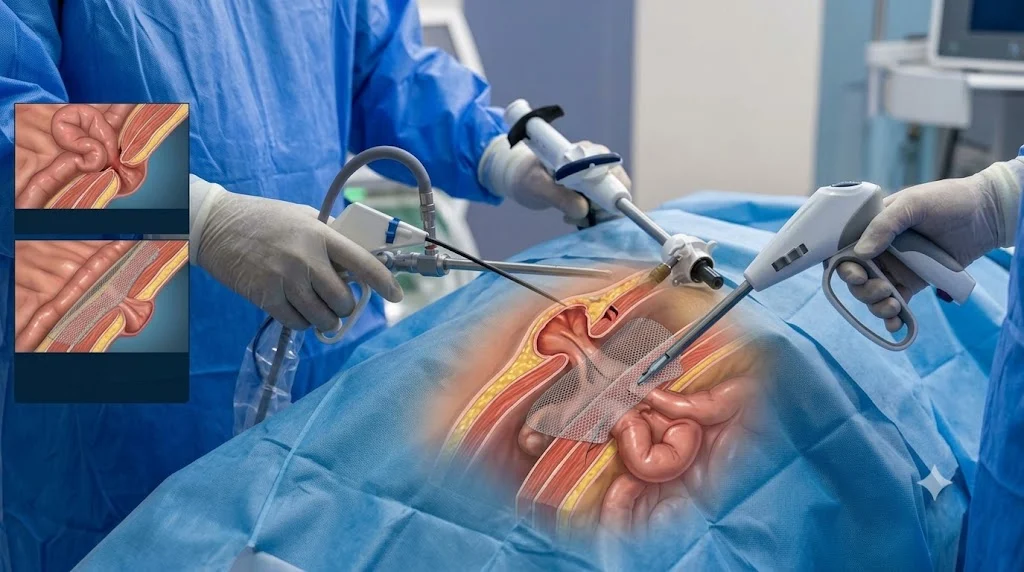
Laparoscopic hernia surgery is performed through several small incisions. A laparoscope, a thin instrument with a camera, allows the surgeon to view the affected area on a screen and repair the hernia from inside the abdominal wall.
A mesh is commonly used to reinforce the weakened area. Because the incisions are smaller, laparoscopic repair may result in less postoperative discomfort, smaller scars and an earlier return to normal activities for suitable patients.
The procedure requires general anesthesia and is technically more complex. It may therefore not be appropriate for every patient or every type of hernia.
Laparoscopic techniques can also be performed using robotic-assisted surgery, which gives the surgeon enhanced visualization and greater precision while working through small incisions.
When Is Laparoscopic Hernia Surgery Considered?
Laparoscopic repair may be considered when a patient is suitable for general anesthesia and the hernia can be effectively treated using this approach. It can be particularly useful when hernia is bilateral and both sides need repair, as the surgeon can address bilateral hernias (hernias occurring on both the left and right sides of the groin) without separate large incisions.
Patients who are physically active or need to return to work relatively quickly may also discuss laparoscopic repair with their surgeon.
However, a preference for smaller incisions should not be the only factor in choosing surgery.
When is open hernia surgery preferred?
Open repair may be considered for certain large or complex hernias, including cases where previous repairs have failed. It can also be useful when a patient cannot safely undergo general anesthesia.
The condition of the abdominal wall, previous operations, the location of the hernia and the surgeon’s experience all influence the decision.
For this reason, a patient should not assume that laparoscopic surgery is automatically the better option simply because it involves smaller incisions.
Recovery After Hernia Surgery
Recovery varies between individuals and depends on the type of repair and the nature of the hernia. Laparoscopic surgery may allow some patients to return to non-physical work sooner because of the smaller incisions and reduced postoperative discomfort.
Open surgery may involve more discomfort around the incision during the initial recovery period and may require more time before strenuous activities can be resumed.
Your surgeon will provide specific guidance on walking, exercise, lifting and returning to work based on your recovery.
Laparoscopic vs Open Hernia Surgery: A Quick Comparison
| Factor | Laparoscopic Surgery | Open Surgery |
|---|---|---|
| Incisions | Several small incisions | One larger incision |
| Approach | Repair performed using a camera and instruments | Hernia accessed directly |
| Anesthesia | Generally, requires general anesthesia | May use local, spinal or general anesthesia |
| Scarring | Usually, smaller scars | More noticeable incision |
| Recovery | May allow earlier return to activities in suitable patients | Recovery may take longer |
| Best suited for | Bilateral hernias, or recurrent hernias where the first repair was open. | Large, complex hernias, or recurrent hernias where the first repair was laparoscopic. |
| Hospital stay | Usually same-day discharge | Depending on recovery |
The differences do not mean that one procedure is better in every situation. The surgeon considers the individual circumstances before recommending an approach.
Can a Hernia Be Managed Without Surgery?
Small hernias without symptoms can be managed with watchful waiting and regular monitoring. However, a hernia cannot heal itself. Surgery is required if the bulge grows, becomes painful, or develops complications.
Red Flags: Emergency Care
Seek immediate emergency care if the hernia becomes firm, tender, intensely painful, or cannot be gently pushed back into place. Other emergency signs include:
- Severe abdominal pain or swelling
- Nausea and vomiting
- Inability to pass gas or stools
- Fever
These symptoms indicate the hernia is trapped (incarcerated) or losing blood supply (strangulated). Do not force a stuck hernia back into place.
Complications: Open vs. Laparoscopic Surgery
Both procedures are routine but carry minor risks of bleeding, infection, fluid collection, recurrence, or chronic pain.
- Laparoscopic Surgery: May cause temporary bloating or shoulder discomfort due to the gas used during the procedure.
- Open Surgery: Causes more localized pain around the incision site during early recovery due to the larger incision.
Making the Right Choice
Choosing between hernia surgery options depends entirely on your specific anatomy, health profile, and recovery goals. Because no single approach fits everyone, a consultation with a specialist is essential to determine the best path forward.
At MITR Hospital, patients have access to comprehensive hernia care, including open, laparoscopic, and advanced robotic surgical options. Our surgical team focuses on customizing a treatment plan tailored precisely to your unique needs, rather than favoring one technique over another.
FAQs on Laparoscopic and Open Hernia Surgery
The duration of hernia surgery depends on the type, size and complexity of the hernia, the surgical technique and whether one or multiple hernias need repair. Your surgeon can provide a more accurate estimate after evaluating your condition.
Pain, soreness or discomfort are common after hernia surgery. The intensity varies depending on the procedure and individual pain tolerance. Your surgical team may recommend pain-relief medicines and suitable activity modifications to help manage discomfort during recovery.
Yes, a hernia can recur after surgical repair, although the risk varies depending on the type of hernia, repair technique, tissue quality and other patient-related factors. Following postoperative instructions and attending recommended follow-up appointments can help support recovery.
Surgical mesh is commonly used to reinforce the weakened abdominal wall and reduce the risk of recurrence. However, mesh is not necessary in every case. The decision depends on the type and size of the hernia, the repair technique and the patient’s individual circumstances.
An untreated hernia may gradually enlarge or cause increasing discomfort. In some cases, the protruding tissue can become trapped, a condition called incarceration, or lose its blood supply, known as strangulation. Sudden severe pain, vomiting or a painful lump that cannot be pushed back requires emergency medical assessment.
The time needed to return to work depends on the type of repair, the complexity of the hernia, your recovery and the physical demands of your job. People with desk-based jobs may return sooner than those whose work involves heavy lifting. Follow your surgeon’s advice before resuming strenuous activities.
No, robotic-assisted hernia surgery is not necessary or suitable for every patient. Its appropriateness depends on the type of hernia, medical history, surgical requirements and the surgeon’s expertise. A specialist consultation can help determine whether robotic-assisted, laparoscopic or open repair is appropriate.
Was this Blog helpful?
Thank you for your feedback!