 Medically ReviewedDr. Nandita DubeyGynaecologist & Robotic Surgeon Medically ReviewedDr. Nandita Dubey
Dr. Nandita Dubey, senior minimally invasive Gynaecologist at MITR Hospital, Kharghar, has 25 years in laparoscopic, hysteroscopic and robotic surgery.
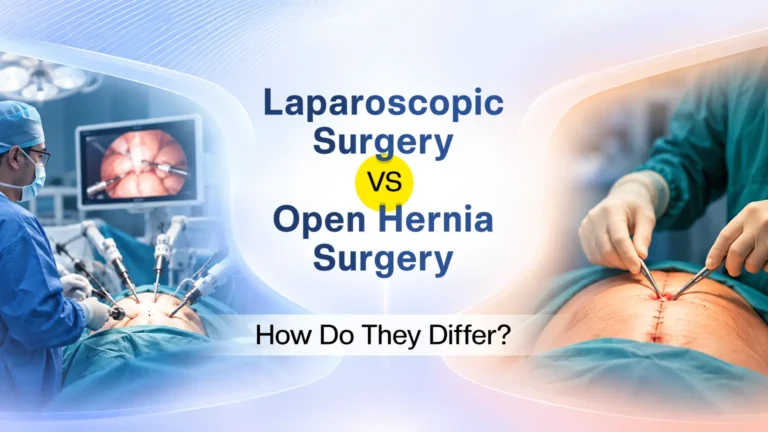
View doctor profile →Two women can be diagnosed with the exact same condition, sit in the same hospital, and walk out with two completely different recovery stories. One is back to her routine in a week. The other is still resting a month later, managing a long scar and a longer road back to normal. The surgery worked for both.The approach is what made the difference.That difference has a name: laparoscopy versus open surgery.
Table of Contents
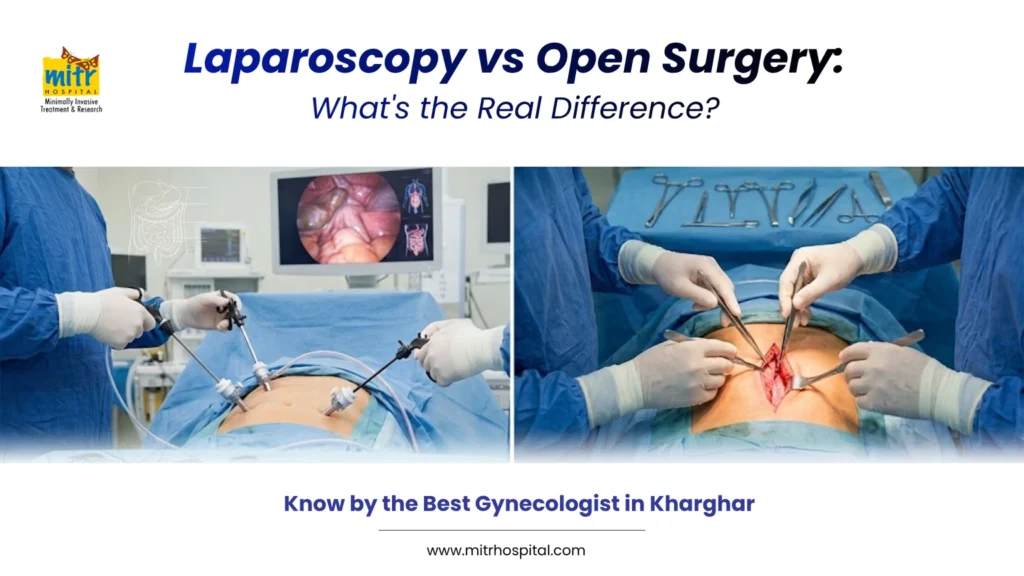
Laparoscopy vs. Open Surgery: Key Differences
The following are the key differences between Laparoscopy and Open Surgery:
| Factor | Laparoscopic Surgery | Open Surgery |
|---|---|---|
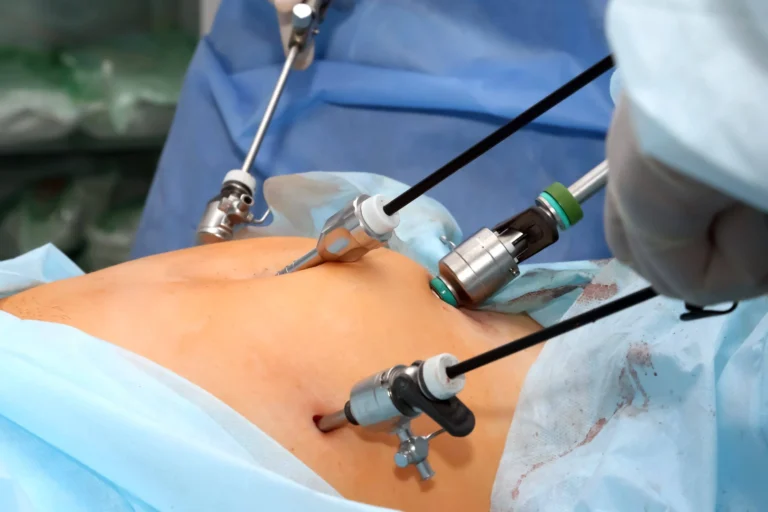
| Incision | A few small incisions, usually 5–10 mm each | One larger incision, ranging from several centimeters to a full lower-abdominal incision |
| Surgical access | Camera-guided surgery using specialized instruments | Direct access to the affected area |
| Scarring | Smaller scars that generally become less visible over time | Larger, more visible scar |
| Visibility | Magnified camera view can provide detailed visibility of small structures in certain cases | Direct vision of the surgical area |
| Pain & blood loss | Less post-operative pain and lower blood loss | Larger incision may mean greater tissue trauma |
| Recovery | Typically faster, with many patients resuming daily activity within days | Longer stays, with several weeks of restricted activity often required |
| Hospital stay | Often shorter | May be longer |
Both laparoscopic and open surgery can treat the same conditions. What changes is how the surgeon reaches the affected area and how the body experiences the procedure and recovery.
Why is Laparoscopy Used in Gynecology?
Laparoscopy has become a preferred approach for many gynecological conditions because the surgeon can operate through small incisions while viewing a magnified image on a screen.
It may be used for:
- Ovarian cysts
- Fibroids
- Diagnostic evaluations
- Other gynecological conditions where minimally invasive surgery is appropriate
Smaller incisions generally mean less tissue trauma, which can contribute to reduced post-operative pain and a faster return to daily activities.
Is Laparoscopy Always Better Than Open Surgery?
Not necessarily, and this is the part that often gets left out of the conversation. Laparoscopy isn’t a universal upgrade; it’s a tool that fits certain situations better than others. Larger fibroids, certain cancers, complex adhesions, or specific anatomical challenges may still require open surgery for safety and thoroughness.
The choice depends on:
- Size of the condition
- Location of the condition
- Complexity of the surgery
- Overall health of the patient
- What the surgeon considers safest and most appropriate A good gynecologist evaluates each case individually, recommending minimally invasive surgery where possible and open surgery where necessary.
What Should You Ask your Gynecologist Before Surgery?
If you have been told that you need a gynecological procedure, ask why a particular surgical approach has been recommended.
Useful questions include:
- Why is this approach recommended for me?
- Can my procedure be performed laparoscopically?
- Why would open surgery be more appropriate?
- What should I expect during recovery?
- How much pain and scarring should I expect?
- Could the surgical approach change during the procedure?
A transparent explanation can help you understand your treatment options and what recovery may look like.
At MITR Hospital, Kharghar, every recommendation, either laparoscopic or open surgery, is based on what the individual case genuinely requires and is explained clearly to the patient.
FAQs on Laparoscopic and Open Surgery
Open surgery may be preferred for larger fibroids, certain cancers, complex adhesions or specific anatomical challenges where a larger incision may provide safer and more thorough access. The decision depends on the individual case.
No. Laparoscopy is suitable for many gynecological conditions, but it is not appropriate for every patient or every surgical situation. The recommended approach depends on the condition, its complexity and what the surgeon considers safest and most appropriate.
The choice depends on the size and location of the condition, the complexity of the procedure and the patient’s overall health. Your gynecologist will evaluate these factors before recommending the most appropriate approach.
Laparoscopic surgery generally results in smaller scars because it uses a few small incisions, usually 5–10 mm each. Open surgery requires a larger incision and therefore generally leaves a more visible scar.
Yes, in rare cases. If an unexpected complication or surgical challenge arises, the surgeon may switch to an open approach to ensure safety and thorough treatment. This is a standard precaution and does not mean the laparoscopic procedure has failed.
Your gynecologist evaluates your condition, its size and location, the complexity of the procedure and your overall health before recommending the most appropriate approach.
Was this Blog helpful?
Thank you for your feedback!