

 Medically ReviewedDr. Vijaykumar YadavUrologist Medically ReviewedDr. Vijaykumar Yadav
Dr. Vijaykumar Yadav, Consultant Urologist, Uro-Oncologist and Andrologist at MITR Hospital, Kharghar, offers robotic urological surgery and kidney stone care.
View doctor profile
Blood in the urine does not always point to a serious condition. However, because there are several possible causes, it is important to find out what is behind it rather than assuming it will go away on its own.
1. Urinary Tract Infection
A urinary tract infection (UTI) can cause blood in the urine, particularly when the infection affects the bladder.
You may also notice:
- Burning or pain while passing urine
- A frequent urge to urinate
- Passing small amounts of urine frequently
- Lower abdominal discomfort
- Cloudy or strong-smelling urine
If the infection spreads to the kidneys, you may also develop fever, chills, nausea, vomiting, or pain in your back or side.
2. Kidney or Bladder Stones
Kidney stones form when minerals in the urine harden into deposits. As a stone moves through the urinary tract, it can cause irritation and bleeding.
Typical symptoms include:
- Sharp pain in the back or side
- Pain that moves towards the lower abdomen or groin
- Blood in the urine
- Nausea or vomiting
- Pain while passing urine
Smaller stones may pass naturally, while larger stones or those causing a blockage may need medical or surgical treatment.
3. Enlarged Prostate
In men, an enlarged prostate can sometimes cause blood in the urine. It can also affect the normal flow of urine.
Other symptoms may include:
- Difficulty starting urination
- A weak or interrupted urine stream
- Frequent urination
- A sudden or urgent need to urinate
- Waking up several times at night to pass urine
An enlarged prostate is common as men get older, but urinary symptoms should still be assessed to understand the underlying cause.
4. Kidney Conditions
Some conditions affecting the kidneys can cause microscopic blood in the urine without any visible change in its colour.
For example, inflammation of the kidney’s filtering units can cause blood and sometimes protein to appear in the urine. Further testing may be needed to determine whether the kidneys are involved.
5. Injury or Strenuous Exercise
An injury to the kidneys or urinary tract can result in blood in the urine. In some cases, strenuous exercise has also been associated with haematuria.
However, visible blood after exercise should not automatically be attributed to physical activity. If it happens, it is better to get it checked.
6. Certain Medicines
Some medicines can contribute to change in the colour of urine. We need to confirm and rule out the presence of blood in the urine in them. Blood-thinning medicines, for example, can make bleeding more likely in some situations.
If you notice blood in your urine after starting a new medicine, speak to your doctor. Do not stop prescribed medication without medical advice.
7. Conditions Affecting the Urinary Tract
In some cases, blood in the urine can be associated with conditions affecting the bladder, kidneys, or prostate, including cancer.
This does not mean that blood in the urine is a sign of cancer. There are many other, more common causes. However, unexplained or recurring blood in the urine should be investigated so that any underlying condition can be identified early.
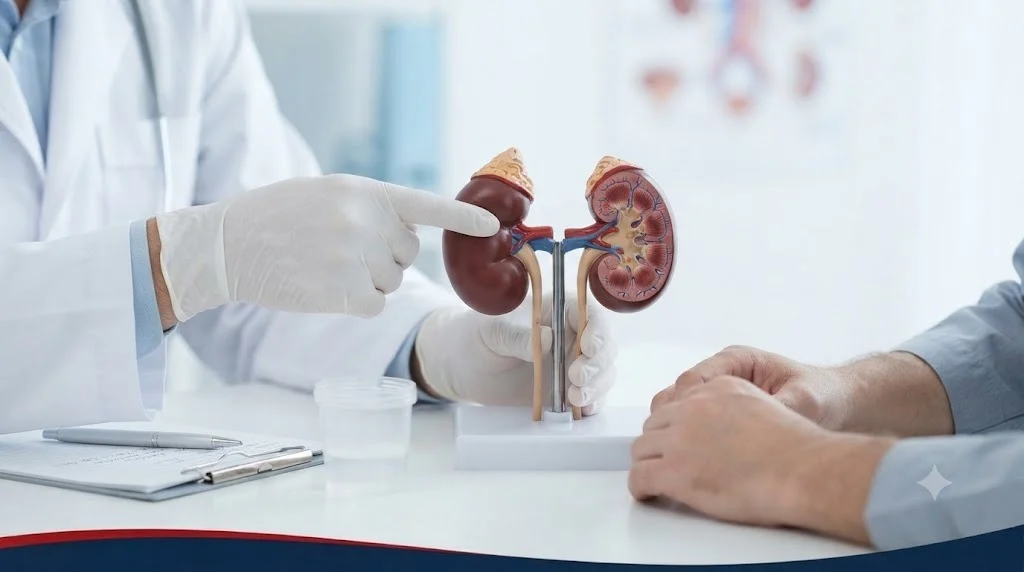
Blood in the urine is worth getting checked even if it happens only once, there is only a small amount of blood, or you do not have any pain.
You should seek medical attention promptly if blood in your urine is accompanied by:
- Severe pain in the back, side, or abdomen
- Fever or chills
- Nausea or vomiting
- Burning or pain while passing urine
- Difficulty passing urine
- Blood clots in the urine
- Repeated episodes of blood in the urine
- Unexplained weight loss or persistent weakness
An evaluation can help determine whether the blood is linked to an infection, stone, prostate problem, or another condition requiring treatment.
Was this Blog helpful?
Thank you for your feedback!