
Changes in your bladder habits can be easy to dismiss, especially as you get older. But a weak urine stream, frequent trips to the bathroom, or difficulty emptying the bladder can sometimes be signs of an enlarged prostate.
An enlarged prostate is very common, medically known as benign prostatic hyperplasia (BPH), is a non-cancerous condition. It becomes more likely from the age of 50 and affects most men as they get older. However, its symptoms can become bothersome and, in some cases, lead to problems with bladder emptying. Knowing which enlarged prostate urinary symptoms need attention can help you seek the right care at the right time.
Table of Contents
The prostate sits below the bladder and surrounds part of the urethra. As it enlarges, it can put pressure on the urethra and affect the normal flow of urine.
Common symptoms include:
These symptoms do not necessarily mean that the prostate is severely enlarged. In fact, the size of the prostate does not always correspond to the severity of symptoms. What matters is how the condition is affecting urination and your daily life.
Not every urinary symptom is an emergency, but some should prompt a medical evaluation.
A sudden inability to pass urine despite having a strong urge and a full bladder is known as acute urinary retention and requires prompt medical attention. In men with an enlarged prostate, this can sometimes be triggered by decongestants or antihistamines in cold and allergy medicines, drinking a large amount of alcohol at once, or constipation. If you have prostate symptoms, speak to your doctor or pharmacist before taking over-the-counter cold or allergy remedies.
Blood in the urine should not automatically be attributed to an enlarged prostate. It can have several causes, including urinary tract conditions that require investigation. Seeing blood in your urine warrants an opinion of a urologist.
Pain or burning when passing urine is not a typical symptom to simply put down to prostate enlargement. It may indicate a urinary infection or another urinary problem and should be evaluated, particularly if it is persistent.
Repeated urinary infections, ongoing difficulty emptying the bladder or symptoms that are becoming progressively more troublesome are reasons to consult a urologist. Persistent obstruction can affect bladder function and, in more serious cases, contribute to complications involving the urinary system.
No. Similar urinary symptoms can occur with several conditions, including urinary infections, bladder problems, prostate inflammation and other prostate conditions.
This is also why urinary symptoms alone cannot be used to diagnose BPH or prostate cancer. A proper evaluation helps determine what is actually causing the change in urination.
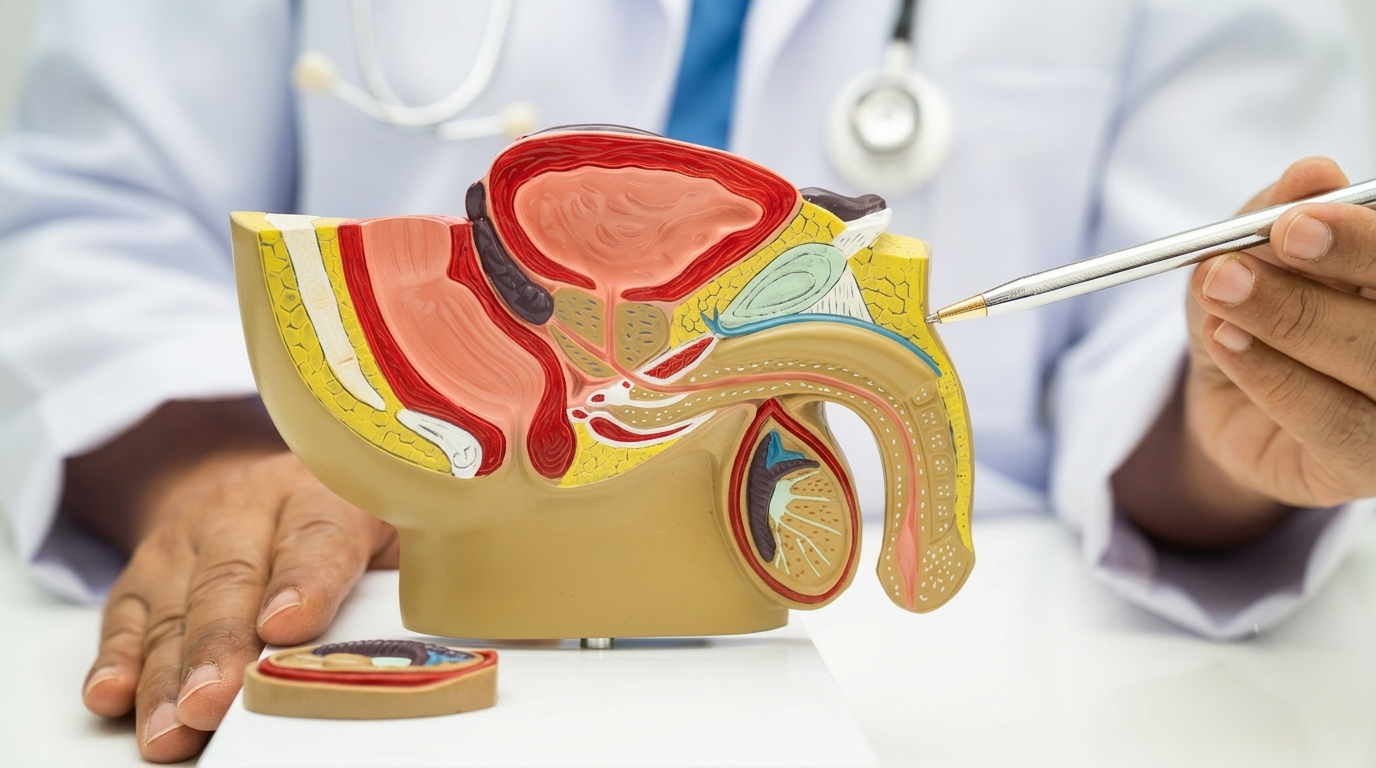
A urologist will usually begin by asking about your urinary symptoms, how long they have been present and how they affect your daily life. Depending on your symptoms, the evaluation may include a physical examination and tests such as:
These tests help the urologist understand whether an enlarged prostate is responsible for the symptoms and whether treatment is needed.
Treatment depends on the severity of symptoms, the effect on daily life and the findings from the evaluation.
For mild symptoms, a doctor may recommend monitoring and lifestyle changes. This can include adjusting fluid intake, particularly in the evening, and reducing drinks that may worsen urinary symptoms.
If symptoms are more troublesome, enlarged prostate treatment may include prescription medicines that improve urine flow or reduce the effect of prostate enlargement. Medicines relax the prostate so urine flows more easily and usually work within days. Others gradually shrink the prostate over several months. They are sometimes used together. Your urologist will explain possible side effects, such as dizziness or changes in ejaculation.
When medicines do not provide enough relief, or when complications such as urinary retention develop, a urologist may consider a procedure. Depending on the prostate and the patient’s condition, minimally invasive or endoscopic treatments may be appropriate.

You do not need to wait until urinary symptoms become severe before seeking help. If you regularly have a weak stream, difficulty starting urination, frequent night-time urination or a feeling that your bladder is not empty, a urological assessment can help identify the cause.
Seek prompt medical attention if you suddenly cannot pass urine, notice blood in your urine, or develop significant pain or other concerning symptoms.
Early assessment does not necessarily mean you will need surgery. It simply helps determine what is causing the symptoms and whether monitoring, medication or enlarged prostate treatment is appropriate.
At MITR Hospital, Kharghar, you can get your urinary symptoms assessed and treated under one roof. Our urology team will examine you, use tests such as ultrasound and uroflowmetry to understand what may be causing your symptoms.
Depending on the severity of the condition, treatment may range from medicines to procedures, including minimally invasive treatment for suitable patients.
Disclaimer: This blog is intended for general informational and educational purposes only and should not be considered a substitute for professional medical advice, diagnosis or treatment. Always consult a qualified healthcare professional for personalised medical guidance.
Early symptoms of an enlarged prostate, also known as benign prostatic hyperplasia (BPH), may include a weak urine stream, difficulty starting urination, frequent urination, waking up at night to urinate and feeling that the bladder has not emptied completely. Symptoms vary from person to person.
A sudden inability to pass urine, blood in the urine, painful urination, fever with urinary symptoms or repeated urinary infections should not be ignored. These symptoms may indicate urinary retention, infection or another underlying condition. Sudden inability to urinate requires urgent medical attention.
Yes, an enlarged prostate can contribute to frequent night-time urination, also called nocturia. Prostate enlargement may interfere with normal bladder emptying, causing you to feel the need to urinate more often. However, diabetes, urinary infections, bladder problems and other conditions can also cause nocturia.
No, an enlarged prostate due to benign prostatic hyperplasia (BPH) is a non-cancerous condition and is not itself prostate cancer. However, both conditions can cause urinary symptoms, and they can occur in the same person. A medical evaluation can help determine the cause of the symptoms.
An enlarged prostate is assessed through a medical history, symptom evaluation and physical examination. Depending on the findings, a urologist may recommend urine tests, a PSA blood test, uroflowmetry or an ultrasound to assess the prostate and bladder emptying. Additional tests may be needed in selected cases.
Yes, many men with an enlarged prostate can be managed without surgery. Depending on symptom severity, treatment may include monitoring, lifestyle changes and prescription medicines that relax the prostate or gradually reduce its size. Procedures may be considered if symptoms persist or complications develop.
Consult a urologist if you regularly experience a weak urine stream, difficulty starting urination, frequent night-time urination or incomplete bladder emptying. Seek urgent medical attention if you suddenly cannot urinate, and obtain prompt assessment for blood in the urine, fever with urinary symptoms or significant pain.

Timing (Mon to Sat): 9:00 AM to 6.00 PM (By appointment)