 Medically ReviewedDr. Vijaykumar MalladiLaparoscopic & Robotic Surgeon Medically ReviewedDr. Vijaykumar Malladi
Consult Dr. Vijaykumar Malladi, Laparoscopic & Robotic Surgeon at MITR Hospital, Kharghar, Navi Mumbai, for general, gastrointestinal and hernia surgery.
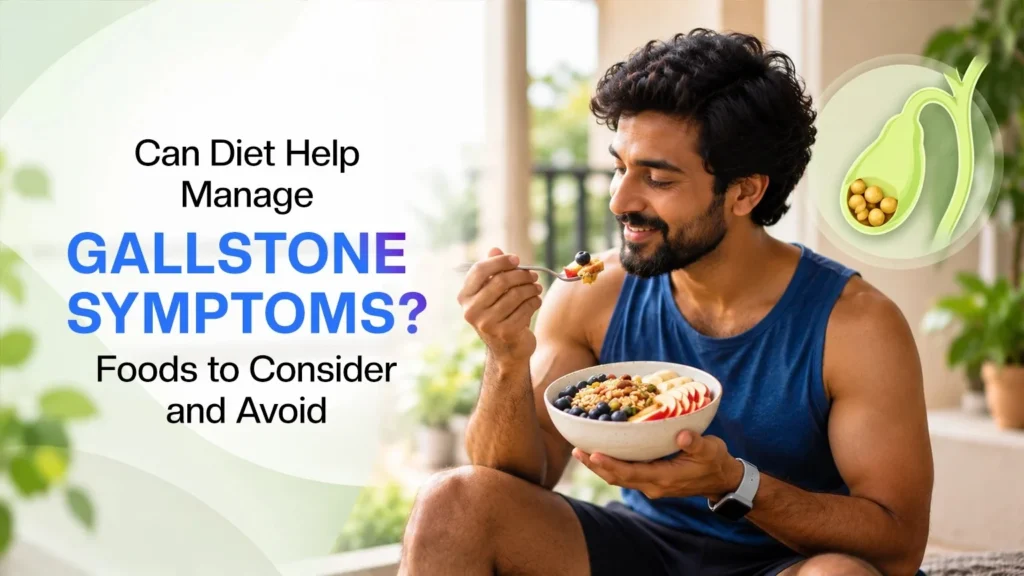
View doctor profile →Gallstones do not always cause symptoms, but when they do, certain foods may make the discomfort worse. What you eat can influence how much the gallbladder contracts and may help reduce symptoms in some people.
We can prevent gallstone formation by following a healthy diet which focuses on fiber-rich foods such as vegetables and whole grains, lean proteins and moderate amounts of fat in the diet, while limiting fried and high-fat foods. However, diet cannot dissolve or remove gallstones that have already formed.
Table of Contents
Key Takeaways
- A gallstones diet may help reduce symptoms by limiting foods that can trigger gallbladder pain.
- Fiber-rich foods, whole grains, vegetables and lean proteins can form part of a balanced diet.
- Fried foods, fatty meats, full-fat dairy and heavily processed foods are best limited.
- Smaller, regular meals may be easier to tolerate than large, heavy meals.
- Diet can help manage symptoms but does not remove existing gallstones. Repeated or severe symptoms may require medical gallbladder stone treatment.
What Is a Gallstone-Friendly Diet?
Eating a balanced diet which includes vegetables, fruits, whole grains and lean proteins can lower unhealthy fats and high fiber in the diet may help manage symptoms.
Fat causes the gallbladder to contract and release bile. For some people with gallstones, large or fatty meals can trigger pain. Reducing these foods may therefore help prevent discomfort.
It is also important not to follow extreme diets, crash dieting or avoiding fat completely. The body still needs some dietary fat for normal nutrition.
Foods to Include in Your Diet
A gallstones diet can include a variety of nutritious, lower-fat foods.
1. Fruits and Vegetables
Fruits and vegetables provide fiber and other nutrients without adding large amounts of fat.
Good options include apples, pears, oranges and papaya, leafy greens, carrots and beans, peas, broccoli and cauliflower, and other fresh or lightly cooked vegetables.
2. Whole Grains
Whole grains can increase fiber intake and form part of balanced meals such as oats, brown rice, barley, ragi or jowar.
3. Lean Protein
Choose protein sources that are lower in fat, such as fish, skinless chicken, dal and other legumes, chickpeas and beans, tofu and egg whites.
4. Low-Fat Dairy
If tolerated, low-fat milk, yogurt and buttermilk can be included. Full-fat dairy, cream and large amounts of cheese contain more fat and may trigger symptoms in some people.
5. Healthy Fats in Moderation
You do not need to avoid all fat. Small amounts of nuts, seeds or oils such as olive oil can be included as part of a balanced diet. The focus should be on moderation rather than completely eliminating fat.
Foods to Limit or Avoid
High-fat and heavily processed foods are more likely to cause problems for people whose gallstone symptoms are triggered by fatty meals.
Try to limit: fried foods such as samosas, pakoras and chips, fatty cuts of meat, processed meats such as sausages and bacon, butter, ghee and large amounts of cream, full-fat dairy products, oily curries and gravies, fast food and deep-fried meals, cakes, pastries and high-fat desserts or foods prepared with excessive oil.
You do not necessarily need to eliminate every food on this list. If a particular food consistently causes pain or digestive discomfort, limiting it may help.
Eating Habits That May Help
What you eat is only part of managing gallstone symptoms. Your eating pattern may also make a difference.
- Eat regular meals instead of skipping meals for long periods.
- Consider smaller portions if large meals trigger discomfort.
- Choose grilled, baked, steamed or boiled foods instead of fried foods.
- Increase fiber gradually to reduce bloating or gas.
- Drink enough water throughout the day.
- Avoid crash diets and very rapid weight loss.
Keeping a simple food diary may also help you identify foods that repeatedly trigger symptoms.
Can Diet Remove Gallstones?
No. A healthy diet may help manage symptoms and support overall health, but it does not dissolve or remove existing gallstones.
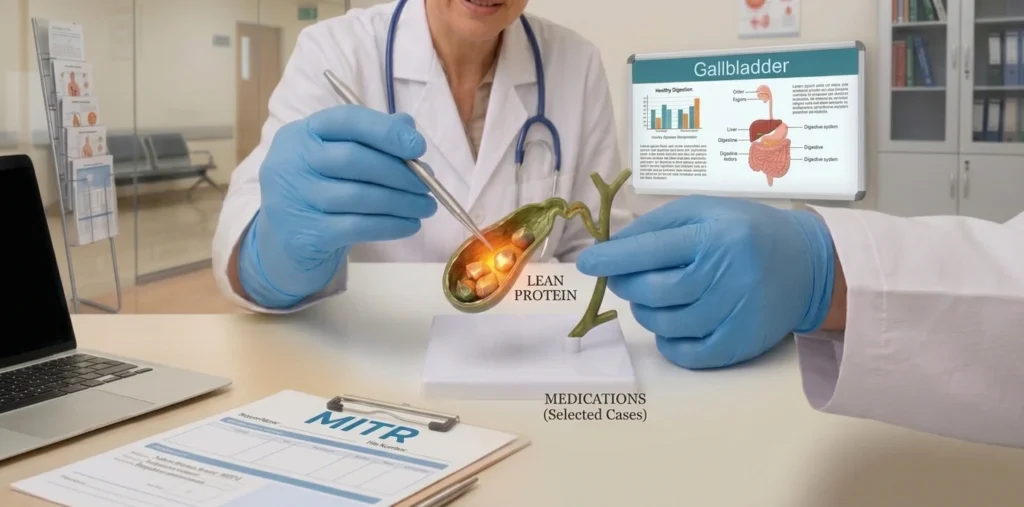
If gallstones cause repeated attacks or lead to complications, medical evaluation may be needed. Depending on the condition, gallbladder stone treatment may include medicines in selected cases or surgery to remove the gallbladder.
When Should You See a Doctor?
Do not rely on dietary changes alone if you have persistent or severe symptoms.
Seek medical attention if you experience:
- Severe or persistent abdominal pain: Intense abdominal pain or discomfort that does not go away, keeps returning, or gradually worsens. It may be accompanied by symptoms such as vomiting, fever, bloating, or changes in bowel movements and may require prompt medical evaluation.
- Fever or Chills: These signs frequently point to a gallbladder infection (acute cholecystitis), especially when they occur alongside persistent abdominal pain.
- Repeated Vomiting: Severe nausea and vomiting can happen if a gallstone physically blocks the bile or pancreatic ducts, causing intense inflammation or triggering pancreatitis.
- Yellowing of the Skin or Eyes (Jaundice): This happens when a stone obstructs the common bile duct. The blockage stops bile from flowing into the intestine, causing a yellow pigment called bilirubin to build up in the bloodstream.
- Dark Urine or Pale Stools: When a gallstone blocks the flow of bile into the gut, excess bilirubin spills into the urine, turning it dark. Meanwhile, the lack of bile reaching the digestive tract leaves stools looking unusually pale or clay-colored.
These symptoms may indicate a complication such as gallbladder inflammation or a blockage in the bile duct.
What Are the Investigations Done for Gallstones?
The evaluation begins with a medical history and physical examination, followed by targeted imaging and blood tests. An abdominal ultrasound is the primary method used to detect gallstones and assess the gallbladder’s condition. Blood tests check for signs of infection, inflammation, or bile duct blockages. Depending on these initial findings, doctors may recommend advanced imaging, such as an MRCP or a CT scan, to investigate further.
Medical Management of Gallstones
Ursodeoxycholic acid tablets can sometimes dissolve small, cholesterol-based gallstones. However, this option is only effective in carefully selected patients, requires many months to work, and carries a high risk of gallstones recurring after the treatment stops.
Surgical Management of Gallstones
Laparoscopic or robotic cholecystectomy involves removing the gallbladder through minimally invasive surgery. This procedure is recommended when gallstones cause repeated symptoms or complications. Completely removing the gallbladder provides a definitive cure, as stones can no longer form there.
Managing Gallstones With the Right Care
Diet can be useful for managing gallstone symptoms, particularly when fatty or heavy meals trigger discomfort. A balanced diet based on vegetables, fruits, whole grains and lean proteins, with limited fried and high-fat foods, may help reduce these triggers.
At MITR Hospital in Kharghar, patients receive guidance on dietary changes to help manage gallstone symptoms. Based on individual symptoms and nutritional needs, a suitable dietary plan can be recommended alongside medical evaluation.
However, diet is not a substitute for medical care when gallstones cause repeated pain or complications. If symptoms continue despite dietary changes, an assessment can help determine the appropriate gallbladder stone treatment.
Frequently Asked Questions on Gallstone Symptoms
People with gallstones may need to limit fried foods, fatty meats, full-fat dairy products, butter, ghee and rich, oily meals. These foods can trigger gallbladder pain in some people, particularly when eaten in large portions. Identifying individual food triggers can help guide dietary changes.
A balanced diet for people with gallstones can include fruits, vegetables, whole grains, oats, brown rice, dal, beans, lean meats and fish. Low-fat dairy and moderate amounts of healthy fats may also be suitable, depending on individual tolerance. A balanced diet is preferable to eliminating entire food groups.
No, dietary changes cannot reliably dissolve or remove existing gallstones. A balanced diet may help manage symptoms triggered by certain foods, but it does not replace medical treatment when necessary. People experiencing repeated gallstone pain should consult a doctor to discuss appropriate treatment options.
Yes, eggs and dairy products may be included in a gallstones diet, depending on individual tolerance and preparation. Egg whites, low-fat milk, yogurt and buttermilk are options to consider. High-fat dairy products and meals prepared with excess butter or cream may trigger discomfort in some people.
Eating regular, balanced meals and choosing smaller portions may help people who experience discomfort after large meals. Prefer steamed, grilled or baked foods over deep-fried options, increase fiber gradually and drink enough water. Avoid crash diets and rapid weight loss, which can increase the risk of gallstone formation.
Severe or persistent abdominal pain, fever, chills, repeated vomiting, yellowing of the skin or eyes, dark urine and pale stools can indicate gallstone complications. These may include gallbladder inflammation, bile duct obstruction or pancreatitis. Seek urgent medical assessment, particularly if pain persists or occurs with fever or jaundice.
Gallstone treatment depends on symptoms, stone characteristics and the presence of complications. People with gallstones that cause no symptoms may not need immediate treatment. Selected patients may be offered medicines to dissolve certain cholesterol stones, while laparoscopic or robotic-assisted gallbladder removal may be recommended for symptomatic gallstones or complications.
Was this Blog helpful?
Thank you for your feedback!