 Medically ReviewedDr. Manish DubeyUrologist Medically ReviewedDr. Manish Dubey
Dr. Manish Dubey, Director and Consultant Urologist at MITR Hospital, Kharghar, has 20+ years in onco-urology and robotic and laparoscopic urology.
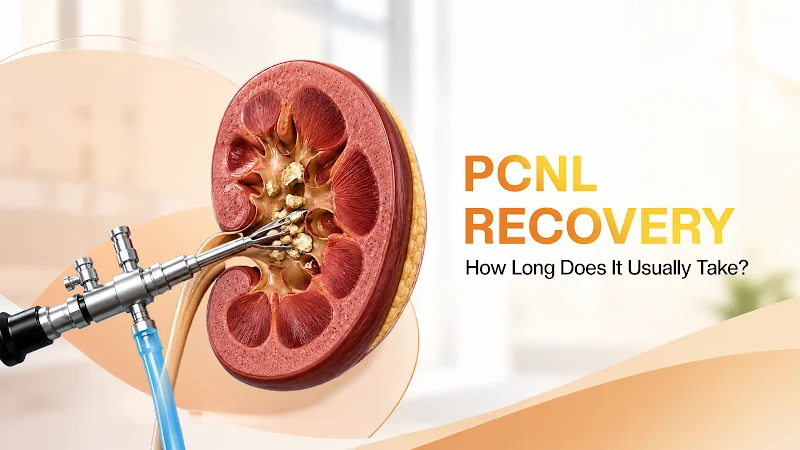
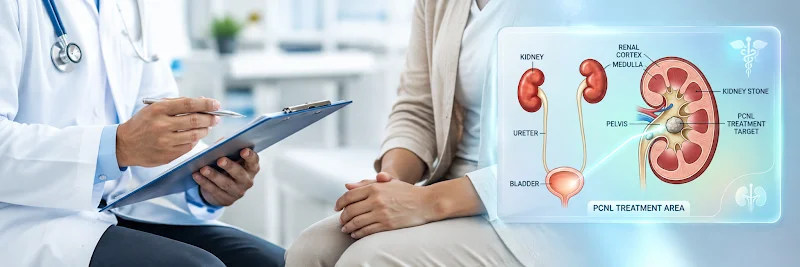
View doctor profile →If you have been advised to undergo PCNL surgery, it is natural to wonder how long recovery will take and when you can get back to your normal routine. PCNL, or percutaneous nephrolithotomy, is commonly used to remove larger kidney stones through a small opening made in the back. MITR Hospital lists PCNL as a treatment for large kidney stones, generally those measuring more than 20 mm.
PCNL recovery time is not the same for everyone. Your hospital stay and return to normal activities depend on factors such as the size and complexity of the stone, the procedure performed and how your body recovers.
Table of Contents
- How Long Does PCNL Recovery Take?
- What Can You Expect After PCNL Surgery?
- When Can You Return to Normal Activities?
- Why Is Follow-Up Important After PCNL?
- What Can Help You Recover After PCNL?
- When Should You Contact Your Doctor?
- PCNL Surgery and Recovery at MITR Hospital, Kharghar
- FAQs on PCNL Recovery Time
How Long Does PCNL Recovery Take?
At MITR Hospital, most patients need a short hospital stay after PCNL and generally remain admitted for around two days, allowing the medical team to monitor recovery and remove the tubes placed during the procedure when appropriate.
Once you return home, you may need to take things easy for the next few weeks. Light daily activities can usually be resumed gradually, but strenuous exercise and heavy lifting should wait until your urologist confirms that it is safe.
Your individual recovery may be shorter or longer depending on the complexity of the procedure and whether any further treatment is required. To understand when this surgery is needed in the first place, read our guide to PCNL surgery.
What Can You Expect After PCNL Surgery?
The first few days are mainly about allowing your body to recover from the procedure and making sure urine is draining properly.
Mild Pain or Discomfort
Some discomfort around the area where the kidney was accessed is expected after surgery. Your doctor may prescribe pain relief to keep this under control.
Blood in the Urine
The amount should gradually settle. If bleeding becomes heavy or does not improve, contact your doctor or the hospital promptly.
A Temporary Tube or Stent
A nephrostomy tube may be placed through the back to drain urine from the kidney after surgery. A ureteric stent may also be used in some cases. Whether you need one, and when it can be removed, depends on your procedure and recovery.
When Can You Return to Normal Activities?
There is no single recovery timeline that applies to everyone.
You can usually start with gentle movement and everyday activities as you feel comfortable. Avoid lifting heavy objects, strenuous exercise and other activities that put pressure on the healing area until your urologist advises that you can resume them.
If your work involves sitting at a desk, you may be able to return sooner than someone whose job involves heavy physical activity. Your doctor can give you more specific advice based on how your recovery is progressing.
The timeline is usually 15 days to full recovery, with pain lasting a median of 4 days.
Why Is Follow-Up Important After PCNL?
Having the stone removed is an important part of treatment, but follow-up is also needed to check your recovery, determine whether any stone fragments remain and also to keep a check on if any new stones are forming.
In some cases, additional imaging may be recommended after surgery. Larger or complex stones may also require more than one procedure to achieve complete stone clearance. Follow-up also gives your urologist an opportunity to discuss measures that may reduce the risk of developing another kidney stone. Read more about kidney stone follow-up care after surgery.
What Can Help You Recover After PCNL?
Your discharge instructions will depend on your procedure and overall health, but some general measures can support recovery:
- Follow your medication instructions: Take prescribed medicines as advised and do not stop antibiotics or other medicines without speaking to your doctor.
- Drink fluids as advised: Adequate hydration is important after kidney stone treatment, unless you have been told to restrict fluids for another medical reason.
- Avoid strenuous activity: Give your body time to heal before returning to heavy lifting, intense exercise or physically demanding work.
- Keep your follow-up appointments: Your doctor may need to check your recovery, remove the stent which was placed during the PCNL or arrange follow-up imaging.
- Follow stone-prevention advice: Depending on your stone type, you may need changes to your diet, fluid intake or other aspects of your lifestyle. See our tips on kidney stone prevention.
When Should You Contact Your Doctor?
Some discomfort and mild blood in the urine can occur after PCNL, but certain symptoms should not be ignored.
Contact your doctor promptly if you develop fever or chills, worsening pain, heavy or increasing blood in the urine, difficulty passing urine, persistent vomiting or other symptoms that concern you.
Fever after kidney stone surgery is particularly important to report because urinary infections can require prompt treatment.
PCNL Surgery and Recovery at MITR Hospital, Kharghar
Our Urology and Andrology team provides advanced PCNL for large kidney stones in our kidney stone department, alongside options like ureteroscopy and RIRS for tailored treatment.
Patients typically stay around two days so we can monitor early healing and safely remove drainage tubes before discharge.
Actual PCNL recovery time varies from person to person. Our urologists in Navi Mumbai will guide your return to normal activities based on your individual healing progress, supporting you every step of the way at MITR Hospital in Kharghar.
FAQs on PCNL Recovery Time
It is a minimally invasive procedure, but it is still an operation done under general or spinal anaesthesia with a short hospital stay, so it is treated with the same care as major surgery.
Not for every stone. PCNL is more invasive than ureteroscopy, so for small stones those are usually the gentler options. For large or complex stones, PCNL clears stones more reliably, which often means fewer procedures overall. PCNL is therefore an established treatment for large or complex kidney stones. The choice between PCNL, ureteroscopy and RIRS depends on stone size, location, complexity and individual health factors.
Yes. Stone fragments can remain after PCNL, particularly when stones are large, multiple or complex. Leftover fragments smaller than 4 mm usually pass on their own. Your urologist may recommend imaging to check whether the kidney is stone-free and determine whether further treatment is necessary.
Not every patient needs another procedure after PCNL. However, additional treatment may be recommended if significant stone fragments remain or the stones cannot be completely removed in one session. Your urologist will decide based on imaging findings, stone characteristics and your clinical condition.
PCNL is designed to remove kidney stones while preserving the kidney. Most patients do not experience significant long-term loss of kidney function from an uncomplicated procedure, although complications can occur. Your doctor may assess kidney function before and after surgery, particularly if you have existing kidney problems.
Yes, kidney stones can develop again after PCNL, even when the original stones have been successfully removed. Recurrence depends on factors such as stone composition, hydration, diet, family history and underlying medical conditions. Stone analysis and personalised prevention advice can help reduce the risk of future stones.
PCNL removes kidney stones through a small opening in the back using specialised instruments, whereas ureteroscopy (URS) or RIRS with laser treatment usually accesses stones through the urinary tract using a thin scope and laser. The appropriate procedure depends on stone size, location, complexity and the patient’s condition.
If a ureteric (DJ) stent was placed during your PCNL, it is temporary. It is usually removed within one to four weeks, depending on how your procedure went, whether any stone fragments remain and how your kidney is healing. Your urologist will give you a removal date before you go home.
Stent removal is a short procedure. A thin telescope is passed through the urinary passage to take the stent out, with no cuts. It usually takes a few minutes and is done as a day-care procedure under short sedation or anaesthesia. Most patients go home the same day.
A stent left in longer than planned can collect crystals, block or become infected. A “forgotten stent” may then need a more complex procedure to remove. So do not miss your stent removal appointment.
Was this Blog helpful?
Thank you for your feedback!