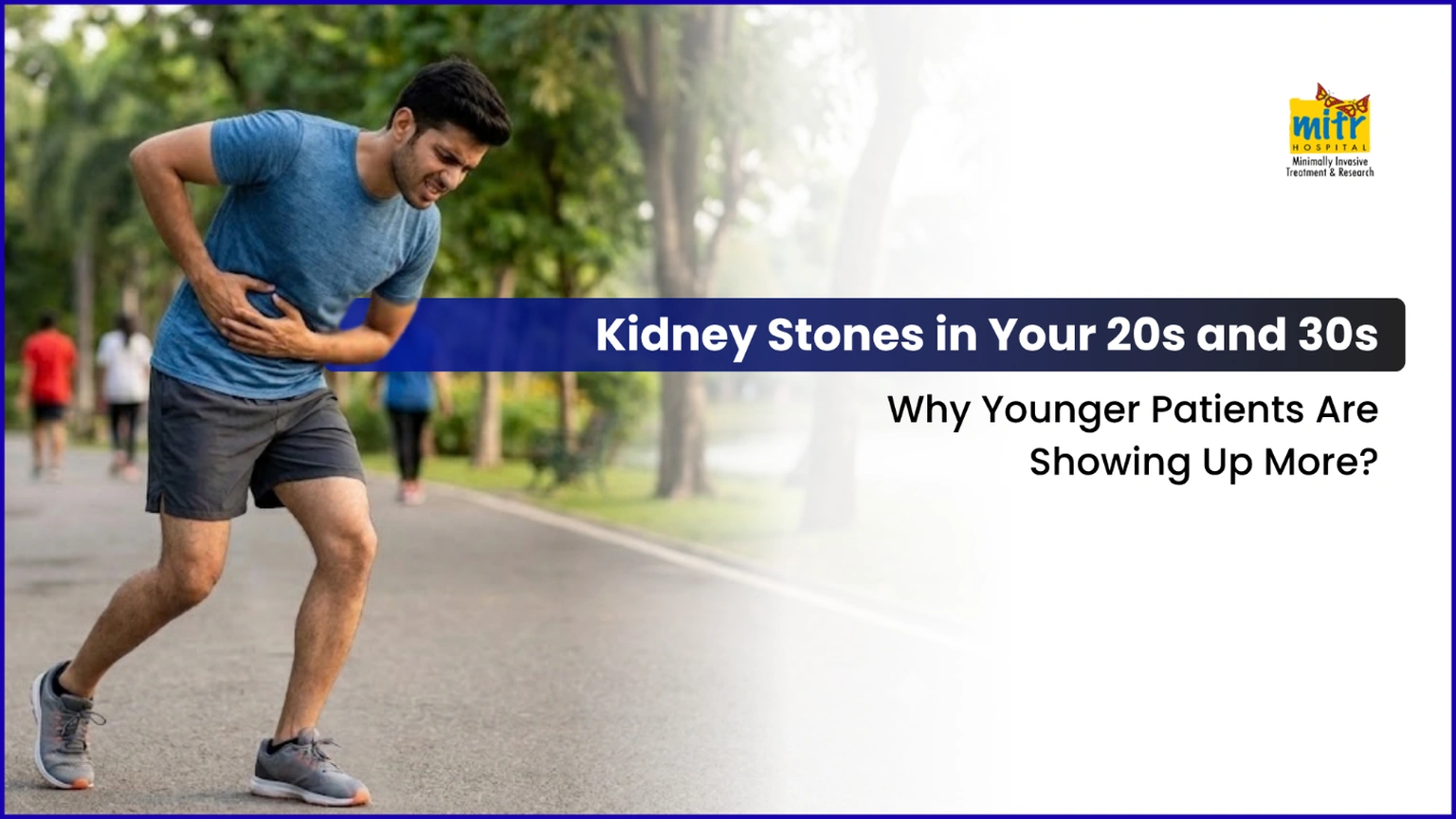
Kidney stones are becoming increasingly common among younger adults, with more people in their 20s and 30s experiencing symptoms linked to dehydration, dietary habits, obesity, high protein intake and sedentary lifestyles. In Navi Mumbai and other hot, humid regions, inadequate fluid intake and excessive sweating can further increase the risk. This guide explains why kidney stones are affecting younger patients, the symptoms to watch for, how kidney stones are diagnosed, available kidney stone treatment options, and practical ways to prevent recurrence.
Table of Contents
Kidney stones were once widely viewed as a health problem primarily affecting middle-aged men. That perception is changing. Urology outpatient departments across Navi Mumbai are increasingly seeing patients in their twenties and thirties, including IT professionals, students, gym-goers and young mothers.
Doctors are also observing a narrowing gender gap, with a notable rise in the number of young women seeking treatment for kidney stones.
Evaluation begins with a simple non-invasive ultrasound to look for stone in the kidneys, ureter or bladder followed by a a non-contrast CT scan, Urine testing and blood work for kidney function,electrolytes (sodium, potassium, calcium etc), and uric acid are also done to identify the cause for kidney stones. For ones with recurrent stone formations, a 24-hour urine study is also advised. If the stone was removed surgically or the patient passed the stone and was able to retrieve it then the stone is analysed for its composition which helps us identify why stones keep forming – findings that also guide which kidney stone treatment will work best.
Kidney stone treatment is not one-size-fits-all. The right approach depends on the stone’s size, location, and composition, along with your kidney anatomy and overall health. Broadly, kidney stone treatment falls into two categories: non-surgical management for smaller stones, and surgical or minimally invasive procedures for larger or complicated ones.
Watchful waiting with hydration. Stones under about 5 mm often pass naturally within a few weeks with increased fluid intake and regular monitoring.
Medical expulsive therapy. Alpha-blocker medication relaxes the ureter, widening it so that the small to medium stones pass more easily and with less pain.
Pain and symptom management. Anti-inflammatory painkillers and anti-emetics control discomfort and nausea while a stone is passing.
Dietary and metabolic correction. For patients with recurrent small stones, adequate hydration, decreased salt intake, and maintaining the citrate levels can be enough to prevent recurrence of stone
Non-surgical kidney stone treatment works best when the stone is small, and not causing infection or blockage. Regular follow-up imaging is used to confirm the stone is moving and not enlarging.
When a stone is too large to pass, blocking urine flow, causing infection, or not responding to conservative kidney stone treatment, a procedure becomes necessary. MITR Hospital offers the full spectrum of surgical stone treatment under one roof.
URS and Flexible URS with Holmium laser lithotripsy: this procedure is done when the stone has slipped into the ureter from the kidney. A thin scope is passed through the natural urinary passage (urethra, bladder and into the ureter) to reach the stone, where a laser is used to fragment the stone – no external incisions, usually a day-care procedure.
PCNL (percutaneous nephrolithotomy). For large or complex kidney stones, a small tract is created through the flank, small scope is passed through this tract, and the stone is fragmented into tiny particles, the preferred surgical kidney stone treatment for stones larger than 2 cm.
Robotic and laparoscopic surgery. Reserved for rare, very complex cases involving anatomical abnormalities alongside stone disease.
A urologist will recommend the least invasive kidney stone treatment that safely clears the stone and protects kidney function – which is why home remedies alone, without medical evaluation, can delay care and risk lasting kidney damage.
Important: Roughly half of stone formers develop another stone within five to ten years without preventive measures. Prevention matters most when you’re young.
Kidney stones can affect younger adults, but timely diagnosis, appropriate treatment and simple lifestyle changes can help prevent complications and recurrence. If you experience severe pain, blood in the urine or fever with chills, timely urological evaluation is important. At MITR Hospital in Kharghar, Navi Mumbai, patients can access comprehensive urology care for kidney stone evaluation, treatment and prevention.
Small stones often pass within a few weeks with adequate fluid intake, but they should still be evaluated by a urologist.
No. Alcohol dehydrates you and can worsen the problem.
Laser lithotripsy is performed under anaesthesia and is typically a day-care procedure with a quick return to routine.
Family history raises risk, though hydration and diet remain the strongest modifiable factors.
Yes. A stone blocking urine flow for a prolonged period, especially with infection, can permanently reduce kidney function.