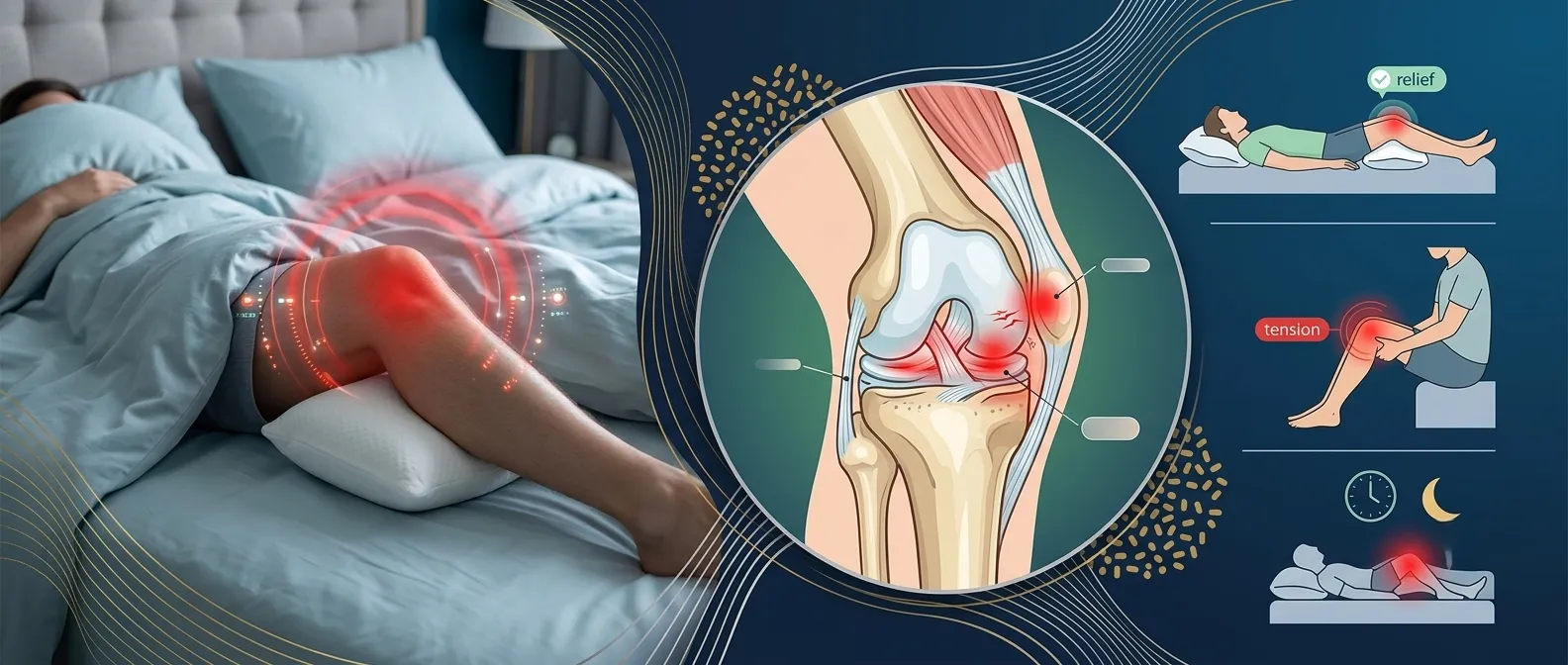
Knee pain can be frustrating during the day, but it can feel particularly uncomfortable when you are trying to sleep. You may notice the pain more when you lie still, change your sleeping position, or wake up during the night because of discomfort.
There is no single reason why knee pain at night is worse. It can be linked to arthritis, a previous injury, inflammation, overuse, or problems affecting the muscles and tissues around the knee. In some cases, pain that keeps returning at night may be a sign that the underlying knee problem needs to be assessed.
Table of Contents
Knee pain can feel worse at night for several reasons. During the day, regular walking and movement help keep the joint mobile and lubricated. When you remain still for several hours at night, the knee may become stiffer, making existing pain or discomfort more noticeable.
Your sleeping position can also put pressure on the knee. Keeping the knee bent for a long time or putting pressure on it while sleeping on your side may increase pain.
Hormone levels fluctuate at night, with cortisol naturally dropping during sleep. Because cortisol helps regulate inflammation, this natural decline can make inflammation-related knee pain and stiffness much more noticeable overnight.
The reason for knee pain at night can vary. If the pain keeps returning or affects your sleep, it is important to identify the underlying cause.
Osteoarthritis is one of the common causes of ongoing knee pain, particularly as people get older. Changes within the joint can lead to pain, stiffness and difficulty with movement.
In the early stages, osteoarthritis may mainly cause pain when walking, climbing stairs or putting weight on the knee. As it progresses, the pain may continue even when the knee is at rest and can become worse at night.
You may notice:
A previous knee injury can continue to cause problems after the initial injury. Damage involving the ligaments, meniscus or other structures within the knee may cause pain during movement and, in some cases, discomfort at rest.
If the knee is already sensitive following an injury, certain sleeping positions or movements while turning in bed may make the pain more noticeable at night. People who have had sports injuries or ligament tears may therefore notice discomfort when changing the position of the knee during sleep.
A sudden increase in physical activity, prolonged walking, exercise or repetitive movements can put extra stress on the knee. This may cause temporary inflammation and soreness.
If the knee becomes irritated during the day, the discomfort may continue when you stop moving and go to bed. This can make pain that was manageable during the day feel more noticeable at night.
Pain related to overuse may improve with rest. However, if it keeps returning or regularly interferes with sleep, it is worth finding out whether another knee problem is contributing to it.
Occasional knee discomfort after unusual activity may improve with rest. However, you should consider seeing an orthopedic doctor if knee pain that is worse at night:
Seek prompt medical attention if severe knee pain follows a significant injury, you cannot put weight on the leg, or the knee becomes suddenly very swollen or significantly difficult to move.
Understanding what is causing the pain is important because knee pain treatment depends on the underlying condition rather than simply when the pain occurs.
Diagnosis begins with understanding how your knee pain behaves during the day and at night. A specialist may ask when the pain started, where you feel it, whether it becomes worse with activity or at rest, and whether you have experienced an injury.
The knee may then be examined for movement, swelling, tenderness and stability. Depending on what is found, imaging or other tests may be recommended to assess the bones and structures within the joint.
The knee pain treatment depends on what is causing the pain, how severe the condition is and how much it affects movement and daily activities. Night-time knee pain does not necessarily mean that surgery is needed.
Depending on the condition, treatment may begin with conservative options such as medicines, physiotherapy, exercises and supportive measures such as knee braces. In selected cases, knee injections may also be considered.
For structural problems such as certain ligament or meniscus injuries, arthroscopic surgery may be recommended. If advanced arthritis causes significant pain and limits mobility despite non-surgical treatment, partial or total knee replacement may be considered. Robotic-assisted knee replacement is another option for selected patients.
Knee pain that gets worse at night is not necessarily serious. However, if it keeps disturbing your sleep, becomes more severe, or does not improve with rest, it should be assessed.
An orthopaedic assessment can help identify whether the pain is linked to osteoarthritis, a previous injury, inflammation, overuse or another knee condition.
The Department of Orthopaedics & Joint Replacement at MITR Hospital in Kharghar offers treatment options ranging from conservative care and physiotherapy to arthroscopy and joint replacement, including robotic-assisted knee replacement for selected patients. Knee pain treatment is planned based on the underlying cause, severity of the condition and its impact on movement and daily activities.
Knee pain may feel worse at night because prolonged inactivity can increase stiffness and make existing discomfort more noticeable. Sleeping positions may also put pressure on the knee. Conditions such as osteoarthritis, previous injuries, inflammation and overuse can contribute to night-time knee pain.
Yes, osteoarthritis can cause knee pain that becomes more noticeable at night, particularly as the condition progresses. Joint stiffness, inflammation and changes within the knee can cause discomfort even while resting. Persistent night-time pain may require an orthopaedic assessment to determine the appropriate treatment.
Changing your sleeping position, avoiding prolonged pressure on the affected knee and allowing the joint to rest after strenuous activity may help. Depending on the cause, a doctor may also recommend medicines, physiotherapy, exercises, supportive measures or other treatments to manage knee pain.
You should consider seeing a doctor if knee pain repeatedly wakes you, continues for several weeks, becomes more severe or affects walking and daily activities. Medical assessment is also recommended when pain is accompanied by swelling, stiffness, locking, instability or follows a knee injury.
Knee pain treatment depends on its underlying cause and severity. Treatment may include medicines, physiotherapy, exercises, knee braces or injections. Some structural problems may require arthroscopy, while advanced arthritis causing significant pain and mobility problems may require partial or total knee replacement.
No, night-time knee pain does not automatically mean surgery is required. Treatment depends on the underlying condition, severity and response to non-surgical care. Many patients may benefit from medicines, physiotherapy and other conservative treatments, while surgery may be considered for certain structural problems or advanced arthritis.
Timing (Mon to Sat) : 12.00 Noon to 1.00 PM and 6.30 PM to 8.00 PM
Leave a Comment