Constant knee pain can hamper the quality of life. Simple day to day activities such as walking around in a park, climbing stairs, or even standing from a seated position can be painful. Many people spend years suffering from severe knee pain without realizing that it may indicate significant structural damage within the knee joint.
Surgical option in the form of knee replacement surgery is offered to patients with knee pain if the medical management fails to cure the pain. Understanding knee replacement surgery can help you make informed decisions about restoring mobility and improving quality of life.
Key Takeaways
Table of Contents
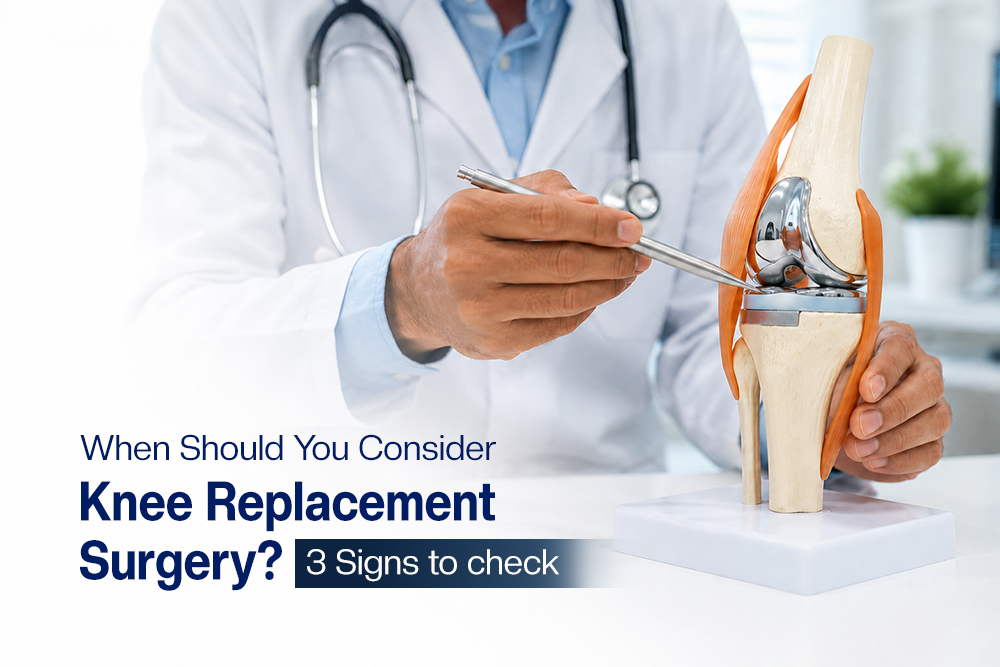
Knee replacement surgery is a procedure in which damaged parts of the knee joint are removed and replaced with artificial implants made of metal, plastic, or other durable materials.
The goal of surgery is to:
The knee is considered one of the important joints in the body. It supports body weight and enables activities such as walking, sitting, and standing. Severe joint damage can make various day to day activity uncomfortable.
A knee replacement surgery is often considered when significant damage to the knee is present and other, less invasive treatment options are ineffective.
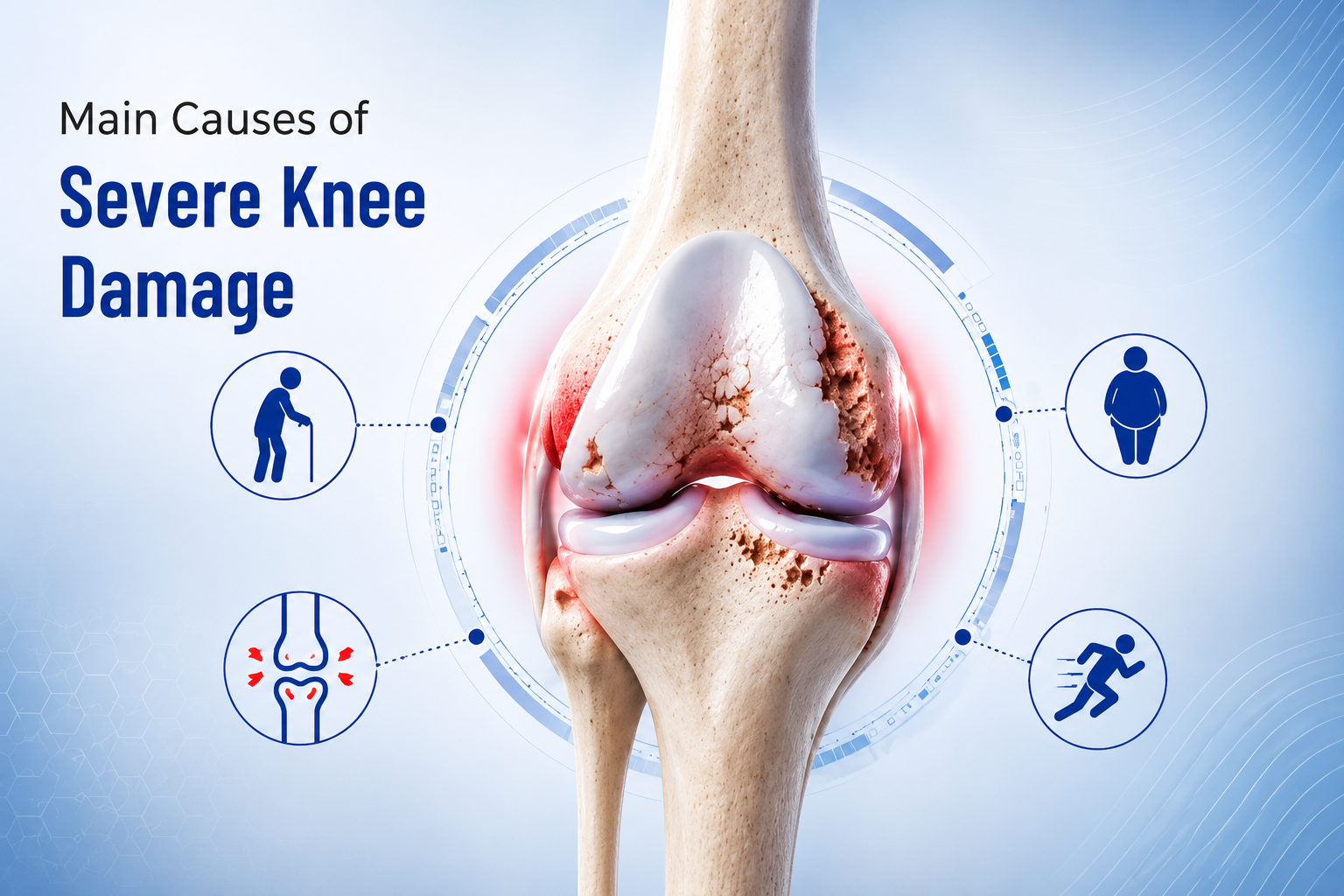
The conditions which can affect the knee joint and its functioning are as follows:
Osteoarthritis
The most common cause of severe knee joint damage is osteoarthritis. This condition occurs when the protective cartilage within the knee gradually wears away. Factors such as aging, obesity, and repetitive joint stress accelerate cartilage degeneration, leading to pain, stiffness, and eventually bone-on-bone contact.
Rheumatoid Arthritis
Rheumatoid Arthritis is an autoimmune disease in which the body’s immune system attacks the joint lining, leading to chronic inflammation, cartilage and bone damage which causes joint swelling, pain, and stiffness.
Post-Traumatic Arthritis
This type of arthritis can develop after severe knee injuries, including fractures, torn ligaments, or meniscal tears. Misalignment of the joints leads to rapid wearing out of cartilage.
Whether knee surgery is needed will depend greatly on how much difficulty knee pain and arthritis have created in the patient’s daily routine. These symptoms may indicate it’s time to talk to an expert about surgery.
Sign 1: Severe Pain That Affects Daily Activities
A strong indicator would be persistent pain that interferes with daily activities. These can include walking (even for a short distance), climbing stairs or rising from a seated position. Persistent pain even during rest, including while sitting or sleeping, may indicate significant joint damage that may not respond adequately to conservative treatment alone.
Sign 2: Severe Stiffness and Changes in Knee Shape
Severe knee joint damage can result in stiffness that significantly limits mobility. It will become hard for you to straighten or bend the joint. At times, the knee may begin to develop a bow-legged or knock-knee deformity due to uneven cartilage wear. Such changes can put even more pressure on the hips, ankles, and lower back, worsening pain.
Sign 3: Non-Surgical Treatments No Longer Help
Before opting for surgery, doctors generally advise undergoing non-surgical forms of treatment, such as:
If you have tried all of the above treatments for many months now but still find yourself experiencing increasing pain or difficulty moving around and walking, then perhaps the joint problem has become worse than what conservative treatment can effectively manage.
There are several significant benefits of undergoing knee replacement surgery that can enhance an individual’s quality of life.
The type of knee replacement surgery procedure is determined by where and how much joint damage exists.
Total Knee Replacement
The total knee replacement is one of the most common procedures. This type of surgery is recommended when damage involves most components of the knee joint. During the surgery, artificial implants replace the damaged or worn-out portions of the knee joint. It provides effective pain relief, mobility, and function for patients who have suffered extensive damage to their knees.
Partial Knee Replacement
Partial knee replacement may be considered if the damage is limited to one compartment of the knee. In partial knee surgery, only the injured part is replaced, and the healthy tissues are retained. Since less tissue is involved, you might recover faster. But keep in mind that this is possible only if the rest of your knee joint is healthy.
Recovery is an important part of achieving the best results from knee surgery.
The First Few Days
Physical rehabilitation starts immediately after surgery. Most patients are encouraged to stand and walk with support within 24 hours. Moving early improves blood circulation and reduces the chances of developing blood clots or joint stiffness.
Weeks 1 to 6
During the first 6 weeks, patients receive physical therapy to increase their knee range of motion and strengthen their legs. Patients gradually increase their activity level, progressing from walkers to canes and eventually to independent walking.
Months 3 to 6
By this stage, many patients will be able to walk, drive, do housework, and even return to work. They will get stronger and more mobile through exercise and rehabilitation.
Exercise is extremely important. The surgery replaces the damaged joint surfaces, but successful recovery requires regular physical therapy and exercises to strengthen muscles, improve flexibility, and ensure the new knee functions properly.
You should not wait until you can no longer walk to make your first visit to a specialist. You need to set up an appointment with an orthopedic surgeon if you have any of the following:
The orthopedist may order digital X-rays and other imaging studies to evaluate joint space narrowing, alignment, and the extent of knee joint damage. They will guide you in weighing the pros and cons of this procedure and determining whether it suits your lifestyle.
Chronic knee pain and disability should not be considered a normal part of aging or daily life. If you have limited mobility and non-surgical therapies no longer relieve your pain, knee replacement surgery might be beneficial. Many patients can return to their normal activities and lead an active lifestyle after recovery.
Selecting the right hospital and orthopedic team is a crucial aspect of successful medical treatment. MITR Hospital provides comprehensive joint replacement services and advanced surgical facilities, supported by a skilled team of orthopedic surgeons. Whether it is from diagnosis through surgical intervention to rehabilitation and aftercare, we create personalized treatment plans to facilitate better recovery and joint longevity.
Knee replacement surgery is a surgical procedure in which the damaged or worn-out parts of the knee joint are removed and replaced with artificial implants made of metal, plastic, or ceramic materials.
A good candidate for knee replacement surgery is someone with advanced knee arthritis or severe joint damage who experiences chronic pain, difficulty walking, and limited mobility despite trying conservative treatments.
Modern total knee replacement implants are designed to last 15 to 20 years or longer with proper care, regular follow-up, and maintaining a healthy lifestyle.
Patients receive anesthesia during the procedure, so they do not feel pain during surgery. Some discomfort is expected during recovery, but pain is effectively managed with medications, physical therapy, and rehabilitation exercises.
Yes. Most patients are encouraged to stand and walk with support within 24 hours after knee replacement surgery. Early movement helps improve recovery and reduces the risk of complications.
Like any surgical procedure, knee replacement surgery carries some risks, including infection, blood clots, implant loosening, stiffness, or nerve injury. However, these complications are uncommon, especially when the procedure is performed by experienced orthopedic surgeons.
You should consider knee replacement surgery if you have severe knee pain, stiffness, or reduced mobility that affects your daily activities and does not improve with medications, physical therapy, or other non-surgical treatments.
If you have severe knee pain, stiffness, swelling, or difficulty walking that continues despite medications, physical therapy, or injections, you should consult an orthopedic surgeon to determine whether knee replacement surgery is the right option.
Knee replacement surgery does not cure arthritis, but it removes the damaged joint surfaces affected by arthritis and replaces them with artificial implants, providing long-term pain relief and improved function.
Knee replacement surgery has a success rate of over 90%, with most patients experiencing long-term pain relief, improved mobility, and a better quality of life.