 Medically ReviewedDr. G. BharatkumarOrthopaedic & Joint replacement Surgeon Medically ReviewedDr. G. Bharatkumar
Dr. G. Bharatkumar is Director and Head of Orthopaedics at MITR Hospital, Kharghar, Navi Mumbai, with over 15 years of experience in robotic-assisted knee replacement and joint replacement surgery.
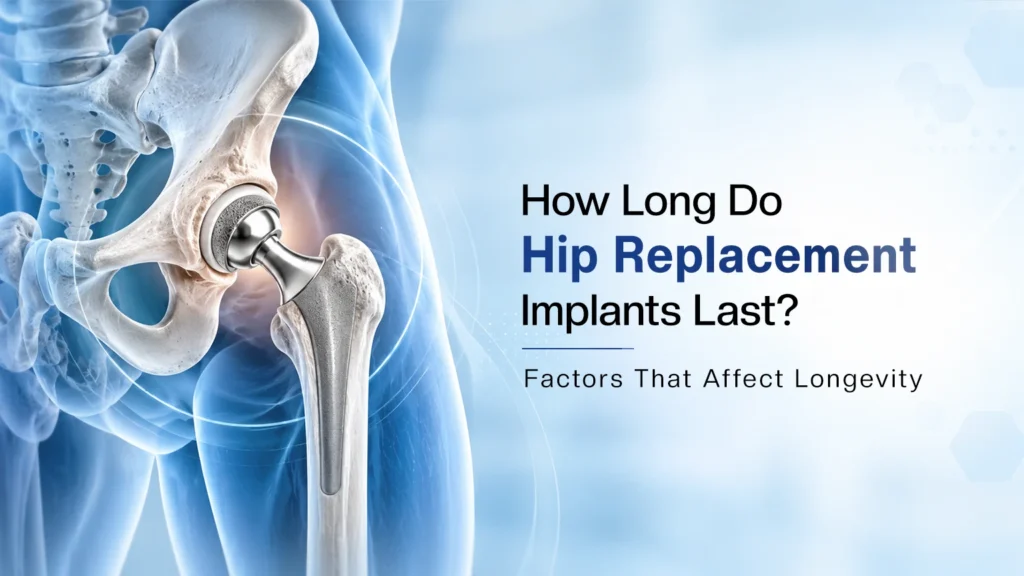
Read more →If you are considering hip replacement surgery, one of the most natural questions to ask is: how long do hip replacement implants last?
How long an implant lasts depends on several factors, including your age, activity level, weight, bone health, implant design and materials, surgical technique and whether complications develop after surgery.
Table of Contents
How Long Do Hip Replacement Implants Last?
Many modern hip replacements can function well for 20 years or more, although some may last longer and others may require revision surgery sooner. A large review of hip replacement data found that around 58% of implants were still functioning at 25 years.
That said, there is no fixed expiry date for an artificial hip. How long it lasts depends on several factors, including the patient’s age, activity level, body weight, bone health, implant materials and surgical technique.
A younger patient may place more cumulative load on an implant over several decades, while a more active lifestyle can also increase the stress placed on the joint. This does not mean that younger or active patients will necessarily need a revision. Rather, these are among the factors that can influence implant longevity.
Advances in implant materials and designs have also improved long-term performance.
Recent research on modern total hip replacements, including studies published in The Lancet, has reported high survivorship at 20, 25 and even 30 years, although outcomes vary depending on the implant and patient population studied.
What Affects Hip Implant Longevity?
Several factors can influence how long a hip replacement continues to function well.
Age at the Time of Surgery
A younger person may have the implant for several decades and place more cumulative stress on it through everyday movement and physical activity. This can increase the possibility of wear over time.
Age alone, however, does not determine how long an implant will last. Overall health, activity and the condition of the joint and surrounding bone also matter.
Activity Level
Regular movement is important after hip replacement surgery, but high-impact activities can place greater stress on an artificial joint.
Walking, swimming and other lower-impact activities are generally easier on the joint than repeated high-impact activities such as running or jumping. Your surgeon and physiotherapist can guide you on which activities are appropriate as you recover.
Body Weight
The hip carries a significant part of your body weight during everyday activities. Maintaining a healthy weight can reduce the load placed on the artificial joint and may support its long-term function.
If weight management is a concern, it can be useful to discuss an appropriate approach with your doctor.
Implant Materials and Design
Hip implants are made using combinations of materials such as metal, ceramic and highly durable plastic components. The choice of implant and bearing surface can influence wear and long-term performance.
Your surgeon selects an implant based on factors such as your age, bone quality, activity level and the condition being treated rather than using the same implant for every patient.
Surgical Technique and Implant Position
The way an implant is positioned during surgery can affect how the artificial joint functions. Accurate placement and appropriate sizing help the components work together as intended.
The surgeon also considers the condition of the surrounding bone and soft tissues when planning the procedure. This is why careful assessment before surgery is an important part of hip replacement surgery and hence surgeon experience matters.
Bone Health
The strength and quality of the bone around the implant can affect its stability. Conditions that affect bone density may therefore need to be considered when planning hip replacement and follow-up care.
Complications
Not every implant that needs revision has simply “worn out”. Problems such as infection, fracture, dislocation or loosening can affect an artificial hip and may require further treatment.
This is one reason why new or persistent pain, swelling, instability or difficulty walking after hip replacement should not simply be assumed to be part of ageing.
Smoking and diabetes are also linked to higher complication rate and increased revision risk.
Can a Hip Replacement Be Replaced?
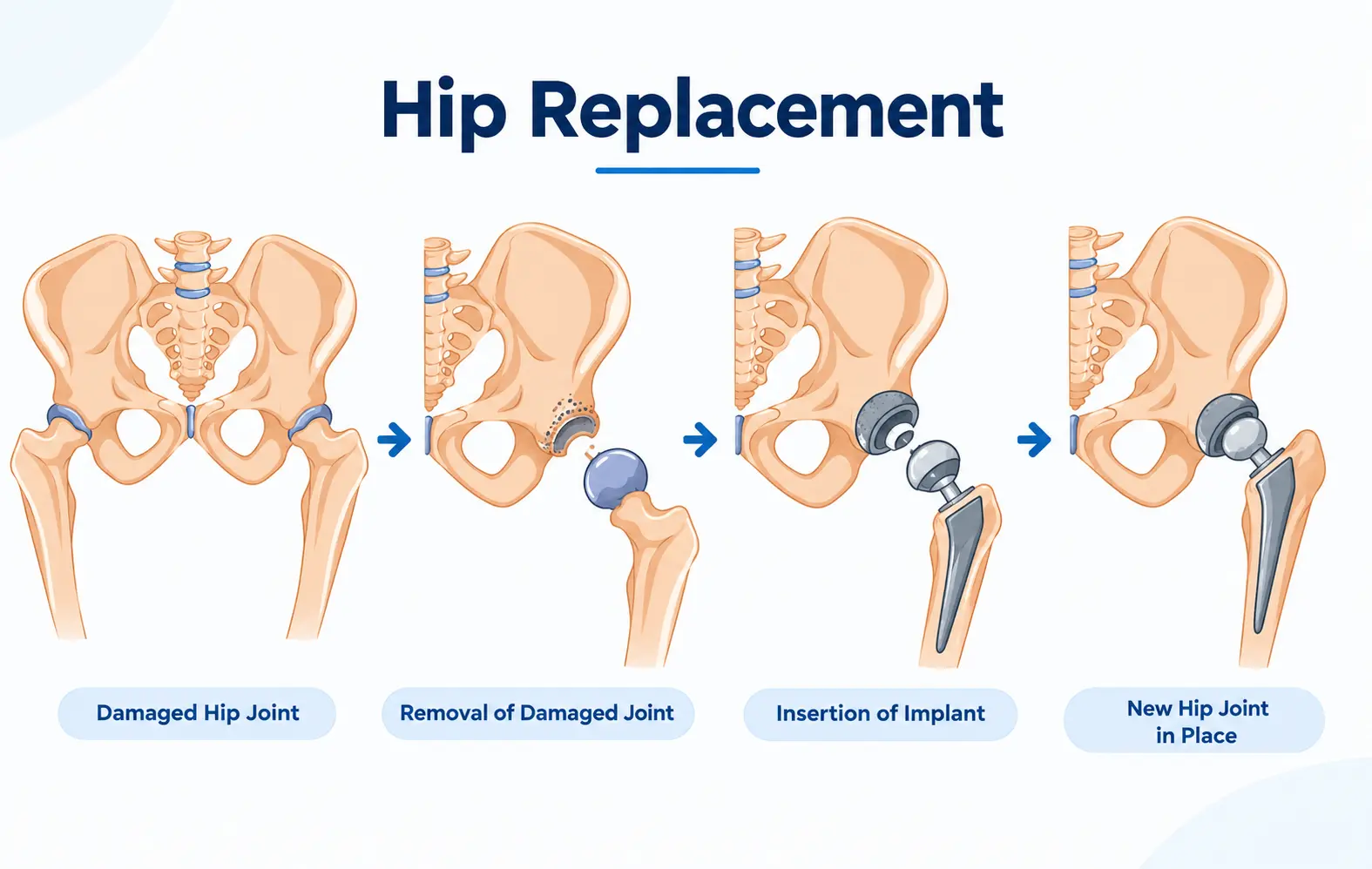
Yes. If an artificial hip becomes significantly worn, loose, unstable, infected or affected by another complication, a revision hip replacement may be considered.
Revision surgery is generally more complex than the original operation because the surgeon may need to deal with changes in the surrounding bone and tissues. The aim is therefore not only to treat problems when they occur, but also to support the long-term function of the original implant through appropriate surgery, rehabilitation and follow-up.
What Can Patients Do to Make a Hip Implant Last Longer?
While no implant lasts forever, patients can take steps to support its long-term function. Maintaining a healthy weight, staying physically active with low-impact activities, following the recommended rehabilitation plan and avoiding activities that place excessive stress on the joint can help. Regular follow-up with your orthopaedic surgeon is also important, particularly if you develop new pain, swelling, instability or difficulty walking.
Hip Replacement Care at MITR Hospital
At MITR Hospital in Kharghar, hip replacement surgery is part of the Joint Replacement Centre’s orthopaedic services. The hospital offers total hip replacement for conditions including osteoarthritis, rheumatoid arthritis, certain hip fractures and other causes of hip joint failure.
The orthopaedic team includes Dr Bharatkumar Gangaraju, an Orthopaedic and Joint Replacement Surgeon who has performed more than 500 knee and hip replacement surgeries.
For someone considering hip replacement, the focus should not be only on how long an implant is expected to last. The choice of implant, surgical planning, rehabilitation and long-term follow-up all contribute to the outcome. A detailed assessment can help determine the most appropriate approach for your hip and your individual needs.
Meet Our Orthopaedic Experts


References
Evans, J. T., et al. (2019). How long does a hip replacement last? A systematic review and meta-analysis of case series and national registry reports with more than 15 years of follow-up. The Lancet.
National Institute for Health and Care Research (NIHR). More than 50% of hip replacements appear to last 25 years.
Frequently Asked Questions on Hip Replacement
Many modern hip replacement implants function well for 20 years or longer, although their lifespan varies between patients. Long-term research has reported that approximately 58% of hip replacements remained unrevised at 25 years. Implant design, patient characteristics and complications can influence long-term outcomes. This figure should be interpreted in the context of the study population and implant types examined.
Yes, some hip replacement implants can last 30 years or longer. However, longevity depends on factors such as implant materials, design, bone health, activity levels and surgical outcomes. Regular follow-up with an orthopaedic surgeon can help monitor the artificial joint and identify potential problems.
Hip implant longevity depends on several factors, including age at surgery, physical activity, body weight, bone health, implant materials, surgical technique and implant positioning. Complications such as infection, dislocation, fracture or loosening can also affect how long the implant functions well.
Age can influence hip implant longevity because younger patients may use their implants for more years and place greater cumulative demands on the joint. However, age alone does not determine implant lifespan. Activity levels, overall health, bone quality and implant design also contribute to long-term outcomes.
Most patients gradually return to walking, climbing stairs and other everyday activities after hip replacement surgery. Recovery depends on individual health, strength, balance and surgical advice. Low-impact activities are generally encouraged, while high-impact exercise should be discussed with the treating surgeon and physiotherapist.
New or persistent hip pain, swelling, instability, reduced mobility or difficulty walking may indicate a problem with the implant. These symptoms can also have other causes, so medical assessment is important. Sudden severe pain, inability to bear weight, fever or wound drainage requires urgent medical attention.
Revision hip replacement surgery may be recommended when an implant becomes loose, significantly worn, unstable or infected, or when a fracture or other complication affects the artificial joint. The decision depends on symptoms, examination findings, imaging and overall health. Revision surgery is generally more complex than the original operation.
Was this Blog helpful?
Thank you for your feedback!