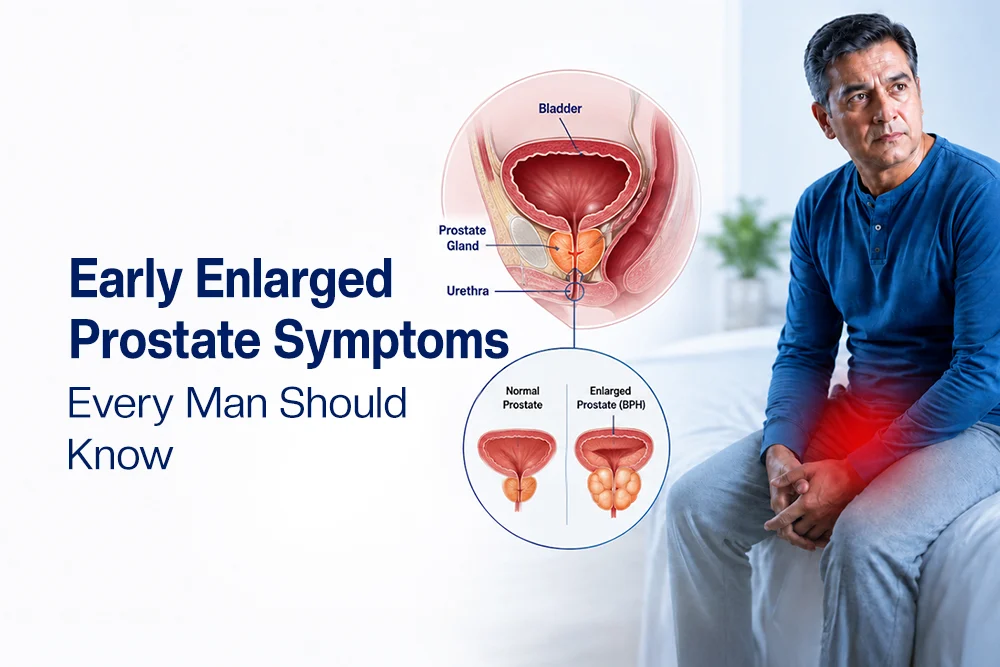

The prostate is a small gland in the male reproductive system located below the bladder and surrounding the urethra. As men grow older, their prostate typically grows bigger, leading to a condition called an enlarged prostate or BPH.
Men often overlook early enlarged prostate symptoms because they may seem minor at first. But catching these signs early can help avoid complications and boost quality of life.
Key Takeaways
The prostate is a tiny reproductive gland in men, roughly the size and shape of a walnut. It lies beneath the bladder and surrounds the upper part of the urethra. The urethra is a thin tube that gets rid of urine and semen from the body through the penis. The prostate gland’s main role is making fluid that nourishes sperm and forms semen. This fluid plays an important role in nourishing and transporting sperm.
As the prostate enlarges, the surrounding tissues limit its outward expansion. It can compress the urethra, restricting the flow of urine.
This can seriously impact how well you enjoy your day-to-day life.
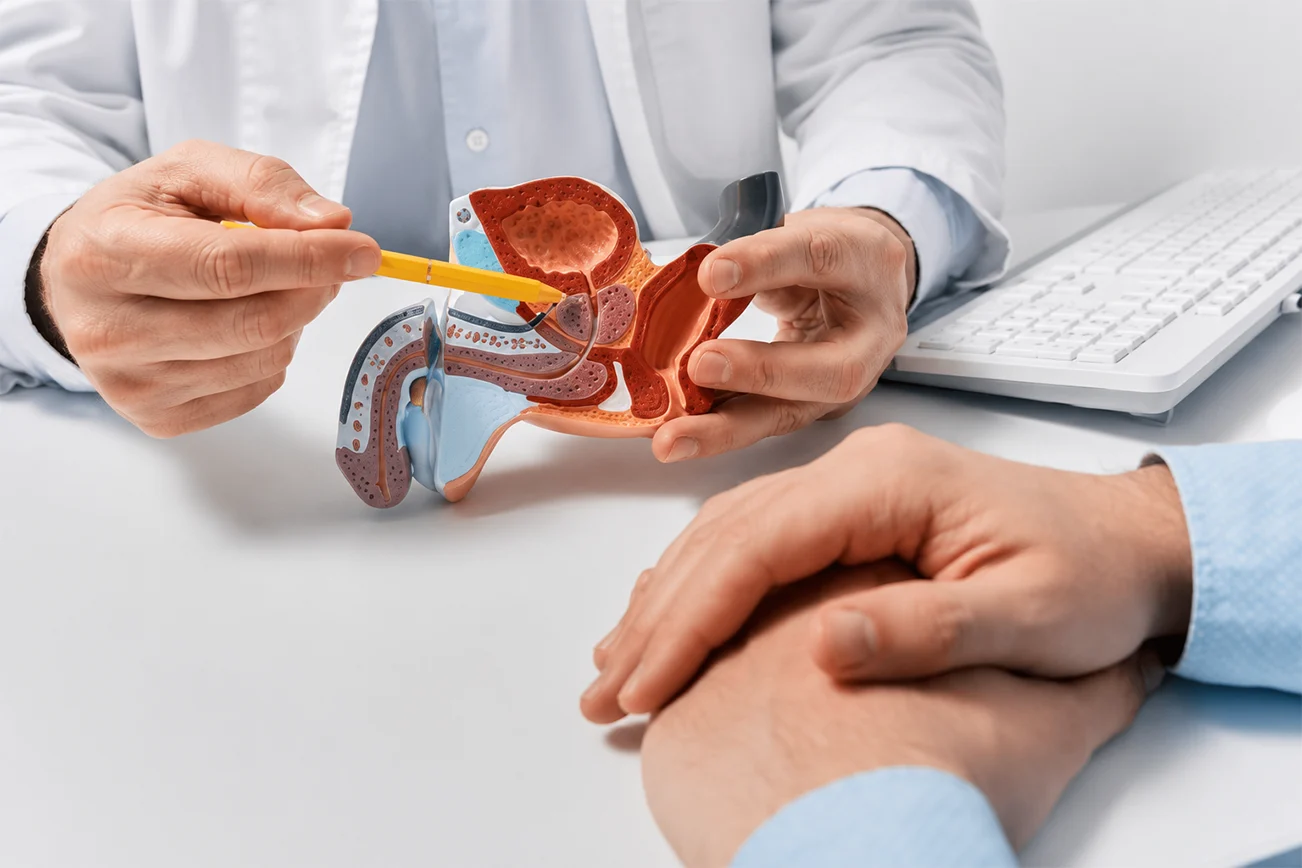
The exact cause of prostate enlargement is not fully understood, but aging and hormonal changes are believed to play major roles.
The growth of the prostate gland is usually gradual, so symptoms typically develop slowly over time rather than appearing suddenly. Instead, early symptoms of enlarged prostate develop subtly over months or even years. Most men dismiss these changes as being simply a part of aging.
Most symptoms of an enlarged prostate are classified as either voiding (obstructive) symptoms or storage (irritative) symptoms. Obstructive symptoms affect urine flow, while irritative symptoms involve increased bladder activity. That is basically all you need to know.
A Weak or Hesitant Urine Stream
You may notice a delay in starting urination, even when you feel the urge to urinate. When urination begins, the urine stream may be weaker than usual.
Intermittent stream
Urine flow may stop during urination and start again later on or not in uniform flow. Some men may also experience post-void dribbling, where urine leaks after finishing urination.
Frequent Daytime Urination
You are finding yourself rushing to the bathroom much more than before. Urinating more than eight times during waking hours may indicate that the enlarged prostate is affecting bladder function.
Waking Up at Night (Nocturia)
It is almost always the most disruptive initial sign. Waking up at least 2, 3, or more times every night to urinate disrupts your sleep cycle, leaving you extremely tired during the day.
Sudden, Uncontrollable Urgency
You will find that you have an urgent need to urinate which means that once the urge for urination starts, it becomes difficult to control it. This occurs because the bladder must work harder to overcome the obstruction caused by the enlarged prostate. As a result, the bladder becomes highly irritable.
Feeling Like Your Bladder is Full
Once you’ve gone to the bathroom, you may still feel as though you aren’t done. There will always be some amount of urine left in the bladder even after voiding. The desire to urinate strikes again 10 to 15 minutes later, even though you have just finished.
Any man can have an enlarged prostate, but some risk factors will greatly increase your chance.
If you have mild symptoms due to an enlarged prostate, then your urologist will advise you to undergo surveillance or watchful waiting. If symptoms begin affecting daily life, there are many successful enlarged prostate treatment options. The treatment options may be medical or surgical management. The first option is always medical management and surgical treatment may be required if medical management fails.
Prescription Medications
Surgical Options
In men with severe symptoms, complications, or significantly enlarged prostates, surgery may provide long-term symptom relief.
Other options: When above mentioned surgical options are not feasible in patients then one of the following treatment options are available and can be recommended to the patients
Surgical Options
In men with severe symptoms, complications, or significantly enlarged prostates, surgery may provide long-term symptom relief.
An enlarged prostate is a very common condition among aging men, and in many cases, it can be managed effectively with appropriate medical care. Most importantly, having an enlarged prostate does not mean that one has prostate cancer.
If you observe that your urine flow is weak, that you need to urinate frequently at night, and even feel a sudden urge to urinate, it would be wise not to overlook these enlarged prostate symptoms
The treatments currently available are very effective and can help relieve symptoms and maintain good urinary health. If the symptoms continue, you should visit a doctor or urologist.
An enlarged prostate, medically known as Benign Prostatic Hyperplasia (BPH), is a common, non-cancerous condition in which the prostate gland increases in size as men age.
Yes. One of the most common symptoms of an enlarged prostate is frequent urination, especially during the night. As the enlarged prostate presses against the urethra, the bladder has to work harder, leading to increased urinary frequency and urgency.
No. Men with mild enlarged prostate symptoms may only need regular monitoring and lifestyle changes. Enlarged prostate treatment is recommended when symptoms interfere with daily activities or lead to complications such as urinary retention or recurrent infections.
The best enlarged prostate treatment depends on the severity of symptoms. Mild cases may be managed with medications, while moderate to severe cases may require minimally invasive procedures or surgeries such as TURP or HoLEP.
No. Benign Prostatic Hyperplasia (BPH), or an enlarged prostate, is a non-cancerous condition. Although both conditions can cause similar urinary symptoms, having an enlarged prostate does not increase the risk of developing prostate cancer.
If left untreated, an enlarged prostate can lead to urinary retention, bladder stones, recurrent urinary tract infections, bladder damage, and, in severe cases, kidney damage. Timely enlarged prostate treatment can help prevent these complications.
Many men experience long-term relief with appropriate enlarged prostate treatment. Medications help manage symptoms, while surgical procedures such as TURP and HoLEP can provide lasting improvement by removing the excess prostate tissue causing urinary obstruction.
In most cases, enlarged prostate symptoms do not disappear on their own because the prostate usually continues to grow with age.
An enlarged prostate does not usually cause pain. However, it can lead to discomfort while urinating, difficulty emptying the bladder, or pain if complications such as a urinary tract infection or urinary retention develop. If you experience persistent pelvic pain or severe discomfort, consult a urologist promptly.
The earliest enlarged prostate symptoms usually include a weak urine stream, difficulty starting urination, frequent urination, waking up multiple times at night to urinate (nocturia), and a feeling that the bladder has not emptied completely.