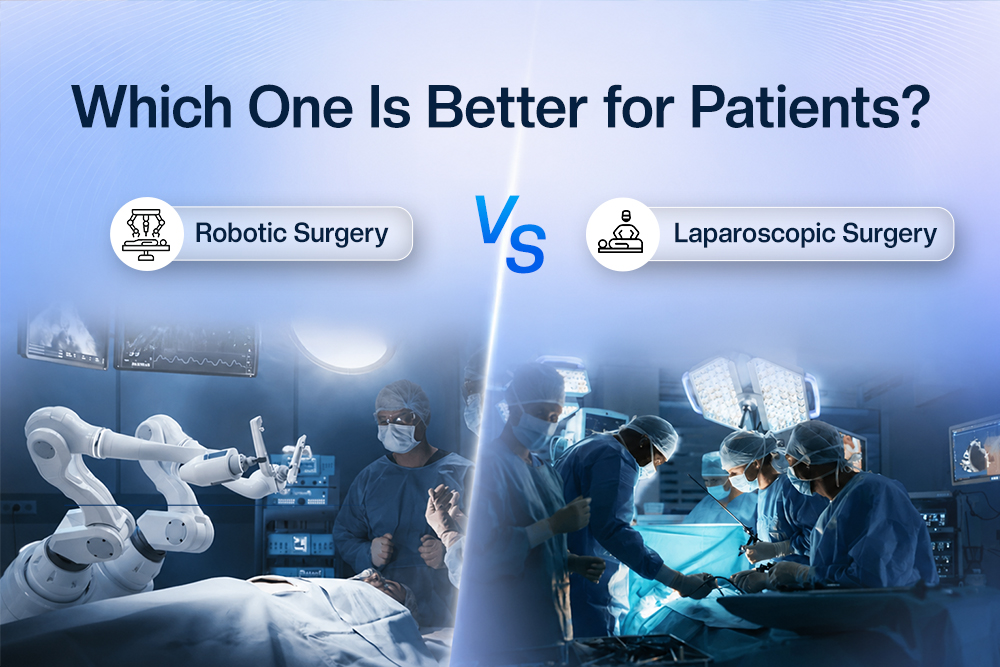
Modern surgical technology has changed the face of complex surgeries. No large surgical incisions or lengthy hospital stays, the surgeons are opting for minimally invasive techniques. Also patients experience less postoperative pain, shorter hospital stays, and faster recovery compared to traditional open surgery. Today, robotic and laparoscopic surgery are among the most commonly used minimally invasive surgical procedures.
When people consider robotic or laparoscopic surgery, they typically ask which one is safer and better. Both options have key advantages over traditional open surgery, making it tough to choose. However, it depends on what you prioritize.
Table of Contents
Planned surgery for you or a loved one can be scary, but understanding the available options can help you feel more confident. In minimal invasive surgeries, there are two common options available which are robotic surgery and laparoscopic surgery.
Laparoscopic surgery involves small incisions using a laparoscope (a thin camera) and specialized surgical instruments. The entire surgery is done by inserting thin long instruments through these small holes.
Robotic surgery is a more advanced form of minimally invasive surgery. From a console in the operating room, the surgeon controls robotic arms that hold the instruments. They move according to the surgeon’s hand movements and commands. Robots don’t do anything alone. A surgeon controls every move.

Laparoscopic and robotic surgeries, both done under general anesthesia, keep patients asleep and pain-free throughout the procedure.
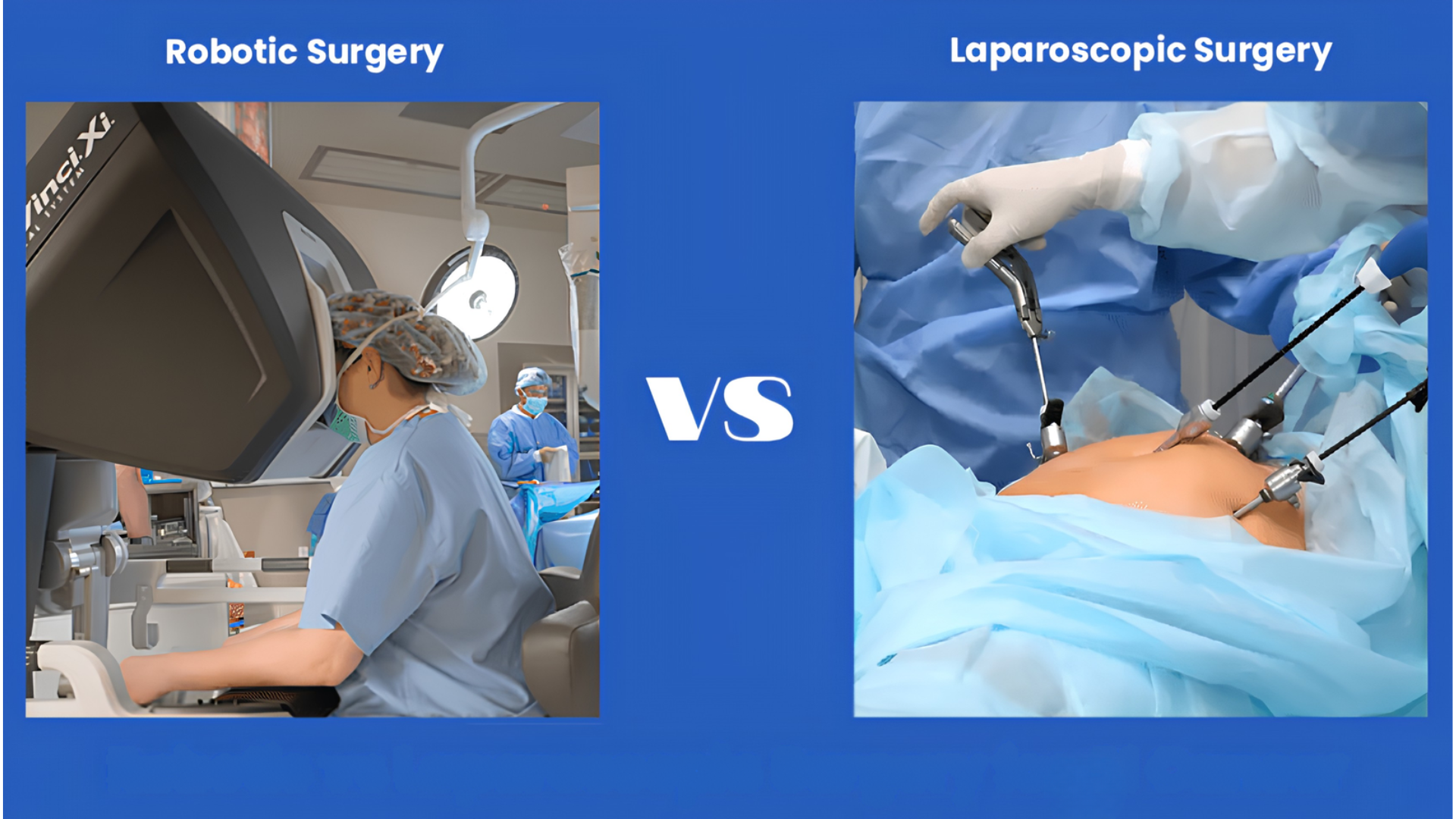
In laparoscopic surgery, the surgeon makes tiny incisions and inflates the area with carbon dioxide gas to create space for the procedure. They slip in a small camera and long instruments through the little openings to do the entire surgery. The surgeon looks at a 2D screen while manually controlling the instruments. They get help from an assistant who holds and adjusts the camera during the operation.
In robotic surgery, the initial steps are similar. Small incisions are made, and carbon dioxide gas is used to create working space inside the body. The robotic system is then placed beside the patient. Surgical instruments and a high-quality 3D camera are attached to these arms.
The surgeon sits on surgeon console and views a magnified, high-definition three-dimensional image of the surgical field. Using special controls, they move robotic arms that then perform super-precise tasks inside the patient.
Laparoscopic and robotic surgeries both have benefits and limitations, so it’s essential to consider what works best for each patient.
Laparoscopic surgery is a big win because it’s been around for decades, and most hospitals offer it. It’s cheaper, too, since it doesn’t require expensive robotic equipment. However, surgeons use simple, rigid instruments and see through a 2D camera. This setup can make certain complex operations, especially pelvic surgeries harder to perform.
Robotic surgery offers enhanced precision and improved visualization of the surgical field. It offer a greater range of motion and dexterity. So, surgeons can reach difficult areas easily. In certain procedures, robotic surgery may be associated with reduced blood loss, smaller incisions, and shorter recovery times.
The main issue is cost: robotic systems are expensive to purchase and maintain, thereby increasing treatment costs. Also, robotic procedures may need additional setup time before surgery starts.
When evaluating clinical success, recognizing that the machine alone doesn’t guarantee great results is key. When debating robotic vs laparoscopic surgery, the technology is merely an extension of human skill. Your recovery depends on many other factors, too:
Talk to your doctor about which surgery is best — robotic or laparoscopic. Ask about their experience, and find out why they think one is better than the other for your case.
It is also important to discuss recovery time, potential risks, and expected results. So, check with your health insurance to get a handle on coverage and extra costs. Knowing all this helps you make a confident choice.
There is no single approach that is best for every patient. Laparoscopic surgery remains highly effective for many routine procedures and is generally more affordable. Robotic surgery may offer advantages in complex procedures requiring enhanced precision and visualization. The most appropriate choice depends on the patient’s condition, the complexity of the surgery, and the surgeon’s expertise.
Even though early fatty liver disease usually doesn’t cause many symptoms, it’s crucial to get regular check-ups. See a doctor if you’ve:
If you have severe symptoms, such as yellow skin or eyes, a swollen abdomen or legs, or sudden confusion, get help right away. Tests such as ultrasound, blood tests, and FibroScan can detect liver disease early and show how far it’s progressed. It lets doctors make a plan to slow, stop, or reverse liver damage before it permanently harms the body, too.
When picking between robotic and laparoscopic surgery, neither option is best for everyone. Both are advanced minimally invasive techniques that may reduce postoperative pain, minimize scarring, and support faster recovery compared with open surgery.
Laparoscopic surgery remains a reliable, cost-effective option for standard procedures. However, robotic surgery offers more advantages for intricate operations that require precision. The most suitable option depends on your medical condition, surgical requirements, and overall health. An expert surgeon makes your treatment safer, so choose your doctor carefully.
Robotic surgery is an advanced form of minimally invasive surgery in which the surgeon performs the procedure using a robotic-assisted surgical system.
The main difference between robotic surgery vs laparoscopic surgery is the technology used. In laparoscopic surgery, the surgeon directly controls handheld instruments while viewing the surgical area on a 2D monitor.
There is no single answer to whether robotic surgery is better than laparoscopic surgery. Robotic surgery may offer improved precision and visualization for complex procedures, while laparoscopic surgery is highly effective, widely available, and generally more affordable.
Both robotic surgery and laparoscopic surgery are minimally invasive procedures that typically result in less pain, smaller scars, and faster recovery than traditional open surgery.
Both procedures are considered safe when performed by experienced surgeons. Robotic surgery may provide enhanced precision and better visualization during certain complex operations, but the overall safety and success of either technique depend more on the surgeon’s experience than the technology itself.
Both robotic surgery and laparoscopic surgery are associated with lower complication rates than traditional open surgery in many cases. Robotic surgery may offer additional advantages in certain complex procedures, but outcomes largely depend on the patient’s condition and the surgeon’s experience.
Both robotic surgery and laparoscopic surgery are minimally invasive techniques that generally cause less postoperative pain than traditional open surgery. The level of discomfort depends on the type of procedure, the patient’s health, and individual pain tolerance rather than the surgical method alone.
Not all procedures require robotic assistance. While many laparoscopic surgeries can also be performed using robotic technology, the choice depends on the complexity of the condition, the availability of robotic systems, and the surgeon’s expertise.
Laparoscopic surgery, also known as keyhole surgery or minimally invasive surgery, is a surgical technique performed through small incisions instead of a large open cut.
Like any surgical procedure, both robotic surgery and laparoscopic surgery carry some risks, including bleeding, infection, reactions to anesthesia, and injury to nearby organs.